When you spend a night outdoors, the difference between a forgettable camp and a great one often comes down to how well you sleep. A good sleep setup keeps you warm, comfortable and ready to enjoy the next day. I have been using simple foam mats and air beds for years, but self inflating mattresses hit a sweet spot for simplicity and reliability. In this article I walk through the unboxing and first inflation of the Dune 4WD Single Mattress, share practical tips from hands on setup, and explain how to get the best performance from this style of mattress.
Before I take a product into the field for a full test, I like to unbox it at home, check the components and do a first inflation so I know what to expect. That way, if a valve is stiff, the foam needs time to expand, or the bag is snug, I am not figuring it out in the dark at a campsite. This is exactly what I did with this mattress.
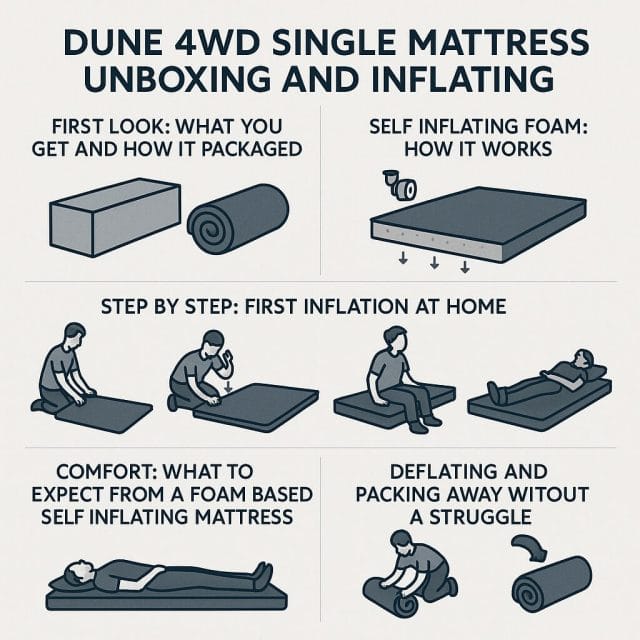
First Look: What You Get and How It Is Packaged
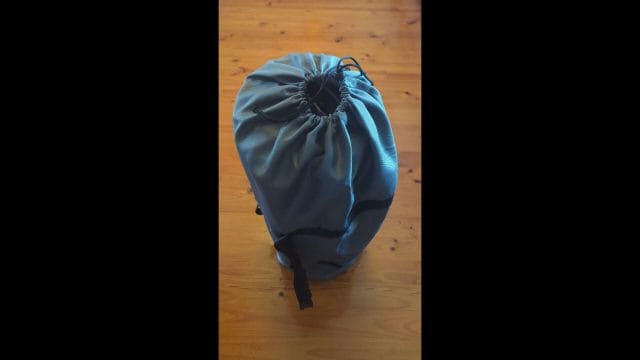
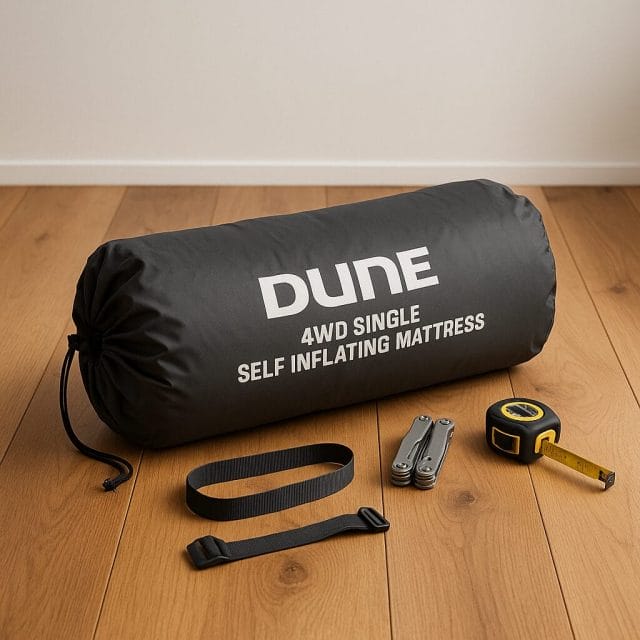
The Dune 4WD Single Mattress arrives inside a carry bag. This is useful for transport and storage because it keeps the fabric protected from dust and grit, and it stops the rolled up mattress from unravelling in your car. On the outside of the bag you will find two straps that secure the roll tightly. The straps are simple to release and easy to refasten when you are packing down. For anyone who often throws gear into a boot or tray, these little touches make a difference because you can cinch the roll quickly and it stays compact.
Once you slide the mattress out of the carry bag, take a moment to look over the outer fabric. I always check for even stitching on any trims, neatly bonded edges, and a consistent feel to the surface. Some self inflating mats are textured to reduce slipping when you are in a sleeping bag. Others have a smoother shell which feels nicer on skin if you will lie straight on it at home. Give the material a gentle stretch with your hands and listen for any unusual crackling that might hint at stiff coatings that will soften later.
There is often a light factory scent when you first unpack a foam based mattress. This is normal and usually fades after a night or two. If it is strong, leave the mattress unfurled in a ventilated room for a few hours before the first sleep.
The Straps and Carry Bag
The two straps included with the carry bag do more than keep things tidy. They also help compress the roll when you are pushing out the last bit of air during pack down. Some straps are sewn to the bag and wrap around the roll, others are separate. In this case the straps secure the sleeping mattress so it does not slide out, which helps keep everything tight in transit. When you re roll the mattress later, align the straps where they originally sat so the roll tightens evenly.
Rolling It Out
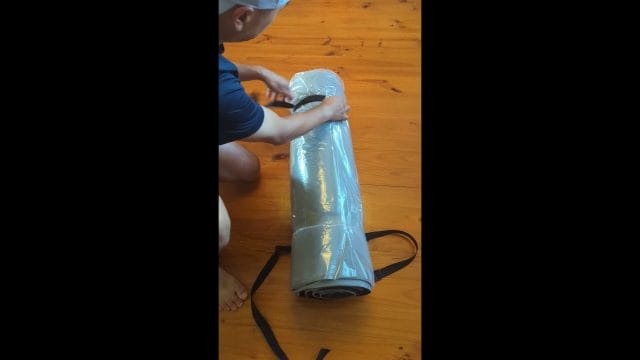
Start by clearing a clean space. A lounge room floor works, or a garage with a mat underneath. Grit is the enemy of coated fabric and valves, so avoid floors with sand or small stones. Unbuckle the straps, remove the roll from the carry bag and gently lay it out. It will try to unroll itself once you loosen your hold. Guide it so it unfurls flat. If the ends curl, reverse roll the first thirty centimetres to help it sit flush.
Self Inflating Foam: How It Works
This mattress uses a foam core that expands when air can enter, which is why it is called self inflating. The foam is bonded to a sealed fabric shell. When you open the valves, the compressed foam tries to return to its natural shape, drawing air in through the openings. There is no pump needed for the basic inflation, although you can add a few breaths for extra firmness later if you want. The main advantage here is reliability. Even if the shell gets a tiny pinhole, the foam still provides cushioning, which is not the case with an air bed that relies entirely on air for its height and support.
Self inflating mats also have an insulating effect because the foam reduces heat loss to the ground. The technical measure of this is called R value. You will not see that labelled on every mattress in this category, but the principle is the same. More foam and a thicker profile generally mean better insulation. If you camp in cooler weather, this matters for warmth and comfort.
Valves: Twist, Not Pull
On this Dune mattress there are two tabs or valves at one end. At first glance they look like pull plugs, but they are actually twist valves. Twist to open them and you will hear a soft hiss as air starts to flow in. There are two valves so the mattress can draw in air faster and so you have redundancy if one sticks. Make sure you open both valves. You can place your hand lightly over each opening to confirm air is moving. The sound is subtle, a gentle breath that tells you the foam is coming back to life after being compressed in the bag.
A new self inflating mattress often takes a little longer on its first inflation because the foam has memory from the factory roll. Five to ten minutes is typical for a first expansion. In cooler rooms it might take a little longer. If the mattress looks uneven during its first fill, do not worry. The foam structure relaxes over a couple of cycles and tends to even out.
Step by Step: First Inflation at Home
Here is the exact routine I follow to inflate a new self inflating mattress for the first time. It is simple and it sets you up for an easy night in the field.
- Clear a clean, flat area. Vacuum if needed so there is no grit.
- Remove the mattress from the carry bag and undo both straps. Set the straps aside where you will not misplace them.
- Unroll the mattress fully with the valves facing up and positioned at the end that is easiest to access.
- Twist both valves counter clockwise to open. You should hear a soft inhale as the foam starts to draw air in.
- Let the mattress rest undisturbed for at least five minutes. Ten is better for the first fill.
- Check the surface by pressing down with your palm. If there are low spots, gently massage the foam by sweeping your hands across the surface toward the valves to encourage even draw.
- If you prefer a firmer feel, add a small number of breaths through one valve while pinching the other closed. Be gentle. A few breaths go a long way.
- Close each valve by twisting clockwise until snug. Do not overtighten. You want a secure seal without stressing the threads.
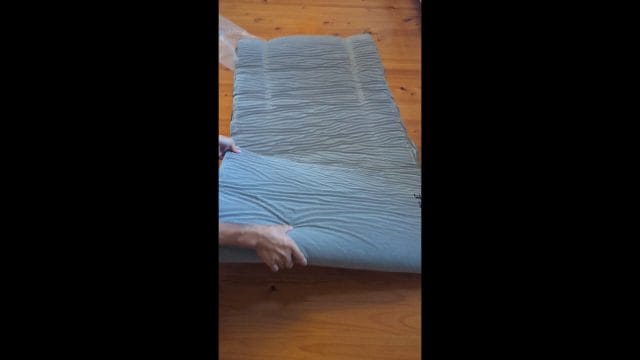
On this Dune mattress, once the valves were opened I could hear air getting in straight away. After several minutes the body looked and felt consistent. When I pressed down, there was a blend of foam support and a little bounce from the air space. The maker notes that when fully inflated it should be about one centimetre thick. The mat in front of me looked thicker than that when the foam relaxed, but thickness varies depending on the foam’s density and the amount of air you add. Remember, the goal is comfort and insulation rather than maximum height.
Why The First Inflation Matters
Giving the foam time to expand the first time matters for two reasons. First, it improves the mattress memory so it will inflate more quickly next time. Second, it lets you spot any slow seal or valve issues before you rely on it outdoors. If you notice uneven inflation, open the valves again and leave it for a longer period. You can also store the mattress unrolled with valves open for a day to fully relax the foam if you have the space.
Comfort: What To Expect From A Foam Based Self Inflating Mattress
Comfort can be subjective, but there are consistent traits across foam based self inflating mats. The foam distributes body weight, so even a relatively thin mat can feel supportive if the ground is plain. On rougher ground with knobs or small stones, a thicker foam layer or an extra underlay makes a clear difference.
With this Dune 4WD Single Mattress, the foam core gives a firm but forgiving feel. When you lie on your back, your shoulders and hips are supported by the foam rather than sinking into an air pocket. Side sleepers often prefer a little extra air for cushioning, while back sleepers may prefer a slightly more open valve before sealing so the mat keeps a flatter profile.
Self inflating mats shine for insulation. The foam slows heat transfer from ground to body which keeps you warmer through the night. If you camp on cold ground, pair the mattress with a good sleeping bag and consider an extra layer such as a thin closed cell foam pad underneath for really cold nights. If you sleep in warm weather, the foam will still feel comfortable because it does not trap air in a single large cavity like an air bed does.
Fine Tuning Firmness
After the self inflating process, you may want to tune the firmness. The easiest method is to lie down on the mat in your preferred sleeping position. Then reach back, crack one valve open a fraction and let a breath of air out until it feels right. Close the valve gently. If the mat feels too soft at the end, open a valve and add a small breath. Close again and check. It is a quick dance and once you find your spot you will do it on instinct each night.
If you are concerned about adding moisture by blowing air into the mat, limit the extra air you add by mouth or use a small pump sack if you have one that fits the valve. Moisture inside a foam core is less of a problem than in pure air beds, but it is still good practice to minimise it especially in cold conditions where condensation can occur.
Deflating and Packing Away Without A Struggle
Deflation is straightforward when you take a methodical approach. The aim is to expel as much air as possible and roll the mat tight enough to slide back into the carry bag without forcing it. Here is the routine that works every time.
- Open both valves fully.
- Starting at the end opposite the valves, fold the far end over about thirty centimetres to create a clean starting edge.
- Roll firmly toward the valves, using your forearms to press out air as you go.
- When you reach the valves, keep the roll under pressure and close both valves to prevent air re entering.
- Use the straps to cinch the roll. This holds it compressed while you slide it back into the carry bag.
- Store the bag in a dry, cool place out of direct sun.
If you are at camp and want a quick pack down, you can do a fast roll with valves open to push out most air, then unroll and re roll more tightly with valves closed. This two pass method takes only a minute more and avoids wrestling with a spongy roll that tries to expand while you are sliding it into the bag.
Storage Tips For Long Term Performance
Foam based mats benefit from being stored loosely when you are not on the road. If you have space at home, unroll the mattress and leave the valves open. This allows the foam to remain expanded and ready to inflate quickly next time. If you must store it rolled in the bag due to space limits, try to let it breathe unrolled between trips. Keep it out of hot sheds and away from direct sunlight which can degrade coatings over time.
Materials and Build Quality: What To Check
While you have the mat out at home, check the valves and seams. Twist valves should move smoothly with enough resistance to feel secure when closed. Look for even engagement of the threads. The valve body should be firmly bonded to the fabric without ripples or lifted edges. Run your fingers gently around the seams and edges of the mat to feel for any rough or thin areas that might suggest a weak bond.
Fabric on self inflating mats ranges from soft brushed tops to tougher, smoother shells. A more textured top can help reduce sliding inside a sleeping bag. A smoother shell can be easier to wipe clean. If you plan to use this mat in a swag or on a cot, a slightly grippier surface is nice so your bed does not shift when you turn. In a tent on a groundsheet, either finish works as long as you keep grit away.
Noise and Feel
Some mats make rustling sounds when you move. This is usually the fabric finish rather than the foam. Give the mat a try with your usual sleeping bag. If noise bothers you, add a thin sheet or a bag liner which quietens the interface between bag and mat. The foam itself should feel uniform, without lumps or troughs. If you feel a ridge, gently knead the area to encourage the foam to settle.
Why Choose A Self Inflating Mattress Over Alternatives
There are three common choices for camp sleeping surfaces. Closed cell foam mats, inflatable air beds and self inflating mats. Closed cell foam mats are simple and reliable but can be thin and firm. Inflatable air beds provide height but can be cold and are more susceptible to punctures rendering them useless. Self inflating mats offer a middle ground with foam support plus the convenience of air filling without a pump. If you camp in mixed conditions and want a dependable sleep surface, self inflating mats like this Dune 4WD Single Mattress are a solid option.
Another advantage is ease of use. Open the valves, let it breathe, and you have a bed. No rummaging for an electric pump or foot pump. If you arrive late at a campsite, you can be lying down in minutes. The footprint of a single size is a good match for most two person tents when you want to run two mats side by side, or it can be used alone in a small tent or swag.
Real World Fit: Tents, Swags, Cots and The Back of a Car
One of the reasons this mattress appeals is its versatility. It is labelled as a single size, which typically means it slots neatly into a standard swag or fits on a camp cot. In a tent, two singles let you tailor each side for firmness and warmth. In the back of a car or four wheel drive wagon, a single mat lays out easily on one side if you are solo and need to leave space for gear. The fabric seems robust enough for occasional use on a clean floor at home if you need a guest bed as well.
If you plan to put it directly on rough ground, use a groundsheet or tarp underneath. This protects the fabric from abrasion and keeps the mat cleaner. If you are pairing it with a stretcher or cot, place the mat directly on the deck and check that the dimensions cover the support rails evenly to avoid sag.
Practical Tips to Speed Up Inflation
On the first few inflations, the foam may be a little slow to expand. You can speed things up with simple steps.
- Unroll and open both valves as soon as you arrive at camp to give the foam time while you set up other gear.
- Gently tug the edges of the mat outward after a minute to help the shell relax.
- Place your palms flat and sweep air toward the valves, then release. Repeat once or twice.
- Add a single breath through one valve if you want extra firmness. Small adjustments make a noticeable difference.
In cooler environments, the foam can be stiffer. Give it a few extra minutes. In warm rooms it expands faster. If you have stored the mat rolled for a long time, leave it unrolled with valves open for a while at home to refresh the foam’s memory.
Care, Cleaning and Simple Maintenance
A little care goes a long way with foam based mats. After a trip, wipe the surface with a damp cloth to remove dust and perspiration. If the mat got muddy, use mild soap and water. Avoid harsh cleaners that can strip coatings. Dry it fully before storing. Moisture trapped inside can lead to a musty smell over time.
Keep sharp objects away from the mat. This seems obvious, but in busy campsites tent pegs, knives and even sharp stones can find their way under gear. Always check the ground before rolling out your mattress. If you do suffer a small puncture, the foam will still provide some support which is one of the strengths of this design. For repairs, follow the maker’s guidance. A standard patch kit with a compatible adhesive and fabric patch can restore the outer shell if needed. Clean the area, apply adhesive as directed and press firmly for the recommended time. Test the seal before the next trip.
Weight and Pack Size Considerations
Self inflating mattresses are not the lightest option, especially in four wheel drive focussed ranges that favour durability and comfort. If you are backpacking for long distances, an ultralight pad is more suitable. For vehicle based trips, overnight fishing sessions or a quick sleepover setup, the weight and pack size of a single self inflating mat is very manageable. The carry bag makes it easy to slot the roll into a corner of the boot or behind a seat.
Safety and Sensible Use
Keep the mattress away from open flames and hot surfaces. Chemical coatings and foam can be damaged by heat. Do not smoke in a tent and never place a heater near the mat. For families, keep an eye on toddlers who may like to play with valves. A loose valve could lead to a softer bed than expected later in the night. Close valves snugly once you are happy with the feel.
My First Inflating Session: What I Noticed
With both twist valves cracked open, the mattress drew air immediately and the expansion sound was audible in a quiet room. I left it for close to ten minutes the first time which allowed the foam to relax. The surface pressed evenly under hand. The feel is consistent with a foam core that carries your weight across the mat rather than pooling in the middle like a cheap air bed.
Closing the valves is a simple twist and the seal felt secure on both. There is a tactile stop that signals you are snug. I prefer not to overtighten plastic threads, so I turn until it is firmly closed and then stop. A quick lay down test tells you more than any spec sheet. I tried back and side positions and found that with a minimal extra breath the support was ideal for side sleeping while back sleeping felt fine with pure self inflation. If you like a soft feel, bleed a touch of air by cracking one valve with your weight on the mat until it suits you.
When you are done, roll from the far end with valves open. You can hear air moving out. The core compresses evenly and the roll tightens up well. Once you are at the valve end, close both valves while holding the roll under pressure. The straps wrap around cleanly and the carry bag swallows the roll without a fight. That is a good sign for daily use because there is nothing worse than wrestling a swollen roll into a bag that is too small.
Troubleshooting Common Self Inflating Questions
Why is my mat not inflating evenly
This can happen on the first or second use because the foam has been tightly rolled for a while. Open both valves and leave it for longer, even up to an hour if you have time. Massage the foam toward the valves with your hands. After a few cycles the foam regains its natural shape and this usually disappears.
Can I leave the mat inflated all day
Yes, especially if you are at a base camp. It helps the foam fully relax. Just keep it out of direct sun to avoid overheating the fabric and valves, and close the tent to keep dust off the surface.
Do I need to add air by mouth
Not necessarily. The self inflating process gets you most of the way. A small number of breaths can fine tune firmness if you want a slightly higher profile. Be gentle and avoid adding lots of moisture in cold weather.
How do I keep it clean in dusty environments
Use a groundsheet under your tent or swag and shake out dust daily. Wipe the mat with a slightly damp cloth before packing. Store it dry to avoid any odour later.
Pairing With Other Sleep Gear
A mat is one part of a sleep system. For best comfort, match it with a suitable sleeping bag and pillow. If you run a canvas swag, this single size is a good fit. In a tent, add a thin sheet over the mat if you prefer a softer feel against skin. On very cold ground, a reflective underlay or an extra thin foam pad beneath the Dune mat adds insulation. On hot nights, open your bag as a quilt and let the foam support keep you comfortable without feeling clammy.
Early Verdict From The Unboxing and First Inflate
Based on this first session, the Dune 4WD Single Mattress looks to be a practical, no fuss option for vehicle based camping. The twist valves are straightforward, the foam core behaves as expected and the straps and carry bag make it easy to manage. The maker suggests it reaches about one centimetre when fully inflated which implies a low profile mat focused on stability and insulation rather than height. In use it feels thicker than that number suggests, which reinforces that comfort is about the foam’s support rather than pure height.
I will take this mattress camping to see how it performs over real ground, in a tent and in a swag. I will check how long it takes to inflate after a few cycles, whether the valves stay secure through the night, and if the fabric resists scuffs and dust. For now, here are the key points you can take into your own setup.
- The carry bag and straps make for easy handling and storage.
- Two twist valves accelerate self inflation and give you simple control of firmness.
- Five to ten minutes is a good first inflate window. Be patient on the first go.
- Foam support means comfort even at a modest height and better insulation than air only beds.
- Deflation is quick with a firm roll toward the valves and immediate closure before strapping.
Hands On Checklist For Your First Night Out
When you are ready to take your mattress out for its first real camp, run through this short checklist.
- Clear the ground and place a groundsheet if you are on rough or dirty terrain.
- Unroll the mat as soon as you arrive, open both valves and let it breathe while you sort the rest of camp.
- Return after a few minutes to check firmness and add a small breath if you need extra cushion.
- Close the valves snugly before you climb in for the night.
- In the morning, open valves and roll firmly from the far end. Close valves at the end to trap the vacuum, strap it and return it to the carry bag.
It is the little habits that make camp life smoother. Once you get used to the rhythm of self inflating gear, setup and pack down become second nature.
Second inflate, overnight test, and what changed
After the first home inflate and a short lay down to set the foam memory, the next session was all about seeing how quickly and evenly the Dune 4WD single mattress settled when I opened the valves again. The second inflate was noticeably faster than the first. The foam had relaxed, so when I unrolled and opened both valves, the mat took shape in a few minutes. By minute five it looked flat and usable, without obvious dips or high spots. I left it alone for another three minutes and then gave it a single breath to bring the shoulder zone up for my side sleeping test. That one breath was enough.
In the field the routine will be even simpler. Open the valves as soon as you arrive, set up the rest of camp, and by the time you are ready to sort your bedding this mat will be at a comfortable baseline. The self inflating design does the work silently while you do other tasks, which is very much the point of a good camp mat.
On the overnight test I wanted to see two things. The first was valve hold. The second was whether the foam and fabric crept or softened over the hours that I was on it. I started with both valves snug and flat closed, not overtight. I checked them again after ten minutes of lying down, just to be sure I had not nudged anything. The surface support felt consistent from lights out until morning. There was no noticeable sag and I did not have to get up to add air. That is exactly what I want from a self inflating mat; steady support without fuss.
Comfort and body position refinement
If you swap between back and side sleeping, the easiest way to fine tune is to test your shoulder and hip zones with a small bleed or a small add. For back sleeping I preferred a little less air, which let the foam do more of the weight distribution. For side sleeping a tap of extra air lifted the shoulder enough to keep my neck neutral. You can do that tuning while lying on the mat. Crack one valve open for just a second to let out a touch of air, or add a single small breath through the valve with your hand shading the opening to avoid dust.
For stomach sleeping, less air again was best. Stomach sleeping can put a curve in the lower back, so having a touch less firmness flattened the body line and reduced pressure. The foam core is forgiving enough to allow micro adjustment without becoming bouncy or noisy, which is the usual complaint with tall air beds.
Temperature and valve behaviour
Night time cool will slow the foam expansion and can shrink the air volume slightly, which is normal physics. If you set the mat up in the afternoon warmth and then come back hours later when the temperature has dropped, you may feel a slight softening. Avoid the temptation to add a lot of air. Instead lie down and do a one second bleed or add a single breath while the mat is under your weight. This gives you a true feel for firmness without overcompensating.
Valves reacted predictably in cooler air. The twist action stayed smooth and the seals felt positive. If you notice a faint hiss while the valve is open, that is just air equalising. Once closed, a gentle fingertip check around the valve seat should be silent. If you ever hear a hiss after closing, open and retighten with a small clockwise twist until the sound stops.
Field fit and setup scenarios
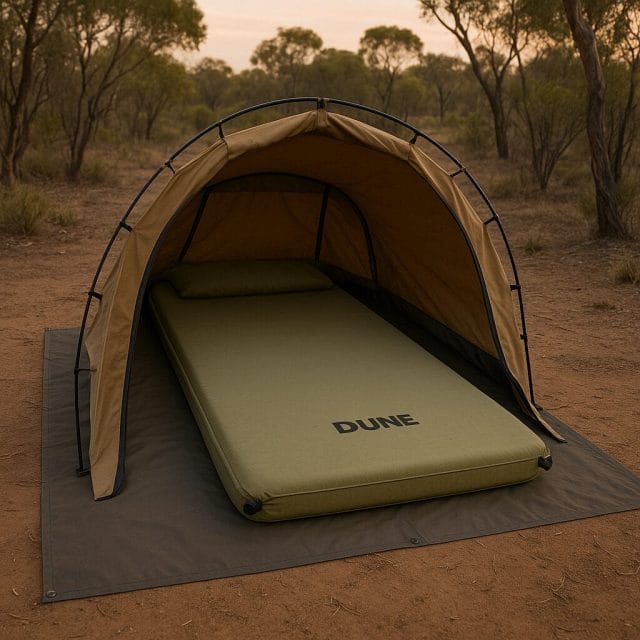
A single mat like this is very flexible across common camping setups. I tried four placements to cover the most likely use cases. Each one needed a small tweak to get the best comfort.
Swag setup
In a traditional swag the mat brings a big upgrade in insulation and stability. Lay the mat directly on the swag base and make sure the valves are towards the swag head end so you can make adjustments without crawling out. If your swag has a thin built in foam, you can leave it in and place the Dune mat on top. If you want a cooler feel in summer, reverse that and put the mat under the swag foam to soften the direct contact.
Cot setup
On a camp cot check the rail pattern first. If the cot has a centre support bar, place the mat so it bridges the bar rather than having a seam directly over it. A soft cloth layer over the cot fabric stops the mat slipping. Remember to centre the valves so they do not press against a cot rail. This avoids any pressure point and protects the valve housing. On a cold night a thin reflective underlay between the mat and the cot sling adds a noticeable warmth boost by disrupting air circulation under you.
Tent floor
On a tent floor the mat feels at its best. Use a groundsheet to keep grit off, then unroll with the valves up at the head end. Two mats side by side are stable for a pair. If you have a ridgeline tent with a slight slope, position the foot end slightly higher to reduce any slide. A light blanket under the mat dampens fabric noise if you are a restless sleeper, though this model was quiet even on bare tent fabric.
Vehicle back
You can also use the mat across the back of a vehicle with the rear seats down. Measure the load space and if you have gaps or uneven sections, fill them with a folded rug before laying the mat. The self inflating foam will take up small irregularities but deep gaps are better bridged first. Keep the valves accessible at the tailgate end. If you sleep with the windows cracked for ventilation, consider a breathable sheet over the mat to reduce dew deposition in humid conditions.
Comfort layering and pillow pairing
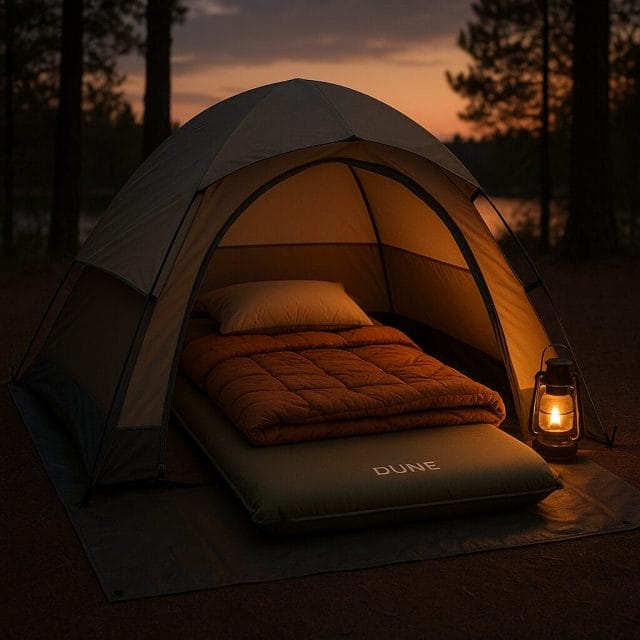
A mat is half the sleep equation. The other half is the layer above and your pillow. Here are combinations that worked well with this Dune single.
- Summer setup: a cotton sheet over the mat for breathability, light fleece blanket, low loft pillow. This keeps the skin feel cool and prevents sticking on warm nights.
- Mid season setup: a microfibre liner inside a light sleeping bag, medium loft pillow. Good for variable temperatures and quick ventilation if you overheat.
- Cold setup: a warm sleeping bag rated for the expected low, a thin reflective underlay under the mat, and a supportive pillow that keeps the neck in line. The foam core boosts insulation and the underlay blocks convective heat loss.
If your pillow slides, place it in a cotton pillowcase with a strip of silicone dots or use a small towel under it. A pillow that stays put makes a bigger difference than you might think, especially on side sleep where neck support matters.
Fine details that improve nightly experience
Little touches change how this mat feels and sounds in use. Fabric texture matters. The top surface on this model has enough grip that your sleeping bag does not slide around. If you find any fabric noise, a thin sheet smooths it out. The foam itself does not creak or collapse under weight, which is often a gripe with tall air beds or very thin closed cell mats. Here the balance is right for quiet comfort.
Edge firmness is the sign of a well bonded foam and fabric. Sit on the edge for a moment to check. If the edge does not roll or fold aggressively, you will find it easier to get in and out. With this mat the edge held enough shape to sit without feeling like you would slip off, which is helpful in a swag where space is tight.
Moisture management, dew, and condensation
In many locations dew is more of a factor than rain. If you sleep with a mesh open or under a tarp, moisture can settle on surfaces and slowly migrate. The mat fabric on this Dune single is resistant enough that morning damp wiped off easily with a dry cloth. Always dry the mat fully once you pack up. If the mat feels cool and slightly clammy after a humid night, stand it up in a shaded breezy spot with the valves open for twenty minutes before packing. This clears any residual moisture and keeps the foam fresh.
On wet ground always use a groundsheet and lift the mat off the surface when possible. If your tent floor has pooled water after heavy rain, a small platform made of camp chairs and a plank or a folded tarp under the mat can keep you clear. Avoid direct sun drying on hot days as intense heat can soften adhesives over time. Shade and airflow do the job without stress on the materials.
Deep clean and periodic care
After three or four trips give the mat a gentle clean. Here is a routine that keeps it in prime shape without overdoing it.
- Open both valves and let the mat relax flat for an hour indoors with good airflow.
- Wipe the surface with a slightly damp cloth and mild soap solution. Focus on areas with visible dust or marks.
- Rinse the cloth and wipe again with plain water to remove soap residue. Do not soak the mat.
- Dry the mat fully. Stand it up and let air pass both sides. Leave the valves open during this drying phase.
- Check the valves for dust. A soft brush around the seat removes grit that can interfere with sealing.
- Inspect seams and edges for any pinch marks from previous rolls. If you see a slight crease line, knead that zone gently to relax the foam.
Once or twice a year, if you store the mat rolled, unroll it for a full day with valves open to refresh the foam memory. If the mat has been in a hot shed, do this in a cool room rather than a warm sunlit area.
Repair and patching in the field
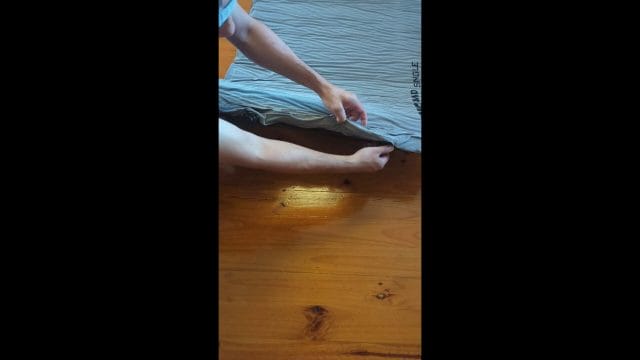
Self inflating mats are tough but they are not immune to punctures. If you do encounter a slow leak from a thorn or a sharp stone, you can repair it with a simple patch kit. Here is a step by step that works with most fabric and foam cores of this type.
- Find the leak: Inflate the mat and listen for a hiss. If you cannot hear it, wipe soapy water across suspect areas and look for forming bubbles. Valves, edges, and the base are common spots.
- Mark the location with a pencil. Deflate the mat fully and dry the area.
- Lightly clean the site with rubbing alcohol on a cotton pad to remove oils and dust. Let it dry.
- Cut a patch from your kit that gives at least one centimetre overlap around the hole. Round the corners of the patch to prevent lift.
- Apply adhesive if the kit is a glue based system. If it is a self adhesive patch, press it firmly from the centre outwards to remove air and ensure full contact.
- Place a flat weight over the patch area for thirty minutes. A book works well. Keep the valves open during this phase.
- Reinflate and check for leaks. If you still hear air, repeat with a slightly larger patch.
Valves can also be serviced. If the valve O ring looks dry or dirty, a tiny application of silicone safe lubricant improves sealing. Never use petroleum products on valve parts or fabric. If a valve becomes hard to turn, clean the seat and threads gently and retest. Replacement valves can often be sourced from the brand or a compatible repair kit if a seal fails completely.
Troubleshooting beyond the basics
Most issues with self inflating mats are simple to resolve. Below are common scenarios and practical fixes.
- Uneven inflation after storage: Lay the mat flat and gently massage thicker areas towards the valves. If the mat was tightly rolled for a long time, leave it open for a full day. The foam will even out.
- Slow fill in cold: Start the inflate earlier. Open the valves and stretch the mat edges lengthwise and across a couple of times to help air flow. Sit on the far end for a minute to encourage draw through the foam cells.
- Valve weep overnight: Clean the valve seat and retry. If the weep continues, add a tiny smear of silicone safe lubricant on the O ring and reseat. Always close the valve gently rather than cranking hard.
- Fabric feel too slippery: Place a light sheet or a textured liner over the mat. Some sleeping bag fabrics slide more than others. The liner adds grip without changing the feel too much.
- Persistent factory scent: Air the mat with valves open in a shaded room for twenty four hours. The scent fades with airflow and time. Avoid scented cleaners as they can cling and mix with the initial smell.
- Edge curl after unrolling: Reverse roll the last twenty centimetres of each end for a minute, then lay flat again. This trains the fabric and foam to settle.
Pack down strategies for daily use
There are two reliable pack down methods that make life easier on the road. The first is the single pass, best when you need to leave quickly after breakfast. The second is the two pass, best when you want the smallest pack size.
Single pass method
- Open both valves and start a firm roll from the far end. Keep the roll aligned and press down along the tube as you go.
- When you reach the valves, close them both to trap the vacuum. This prevents the mat re inflating if you need to re position the straps.
- Apply the straps evenly and pop the mat into the carry bag. The single pass gives a slightly fatter roll but is quick and repeatable.
Two pass method
- Open both valves and roll once quickly to purge most air. Do not worry if the roll is a bit rough.
- Unroll again, keep the valves open, and immediately start a tight, aligned roll from the far end with firm pressure.
- Close the valves at the finish, apply the straps, and bag. This gives a smaller, more even cylinder that packs neatly.
Always take a moment to check strap placement. If a strap sits over a seam or a valve stub, slide it a few centimetres to avoid creating pressure points. If the bag feels tight on the last tuck, do not force it. Let a tiny bit of air back into the mat by cracking one valve for a second, then close and tuck again.
Long term durability and material notes
The foam in self inflating mats is designed to expand and contract thousands of times. Your job is to avoid stress that shortens its life. Do not leave the mat fully compressed for months. Do not bake the mat in direct sun on hot days. Keep it clean of grit to protect valves and fabric.
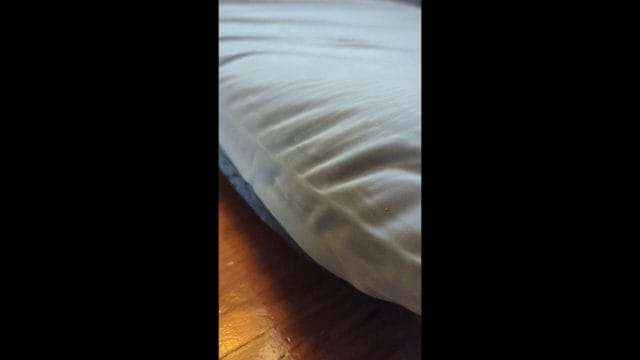
Edge seams should stay smooth without puckering after repeated rolls. Run your fingers along the edges during clean up and feel for any rough sections. If you find one, gently knead it out. Fabric texture should feel even without thin patches. If you notice any abrasion after a rough ground camp, add a groundsheet next time. The valve bond took everything I threw at it without movement. That is the point you check first when you get a new mat. If a valve collar wobbles, return or repair before you trust the mat in the field.
It is also worth saying that a single mat like this is not meant to replace a thick home mattress feel. What it should deliver is stable support, a warm surface, and minimal fuss. The Dune single hit those marks comfortably in my testing.
Use cases beyond camping
While the obvious home for this mat is the bush or the beach, it works in a handful of other contexts.
- Road trip naps: lay the mat across the rear of a vehicle during long breaks for a comfortable nap without setting up full camp.
- Guest bed layer: on a thin fold out couch use the mat to smooth pressure points and add warmth. Your back will thank you.
- Work site rest: for tradies who need a midday rest, the mat is quick to lay out and pack. It beats a bare floor or a noisy air bed.
- Kids sleepovers: simple to set, no pump noise, and less risk of deflation at three in the morning compared with tall air beds.
In all these scenarios the carry bag and straps make transport tidy. The mat is not ultralight, but it is light enough to carry from car to door or room without a fuss.
Comparisons and why you might choose this style
Every sleeping surface is a compromise between height, weight, speed, comfort, warmth, and puncture risk. Here is where the Dune single sits in that balance.
- Versus tall air beds: the Dune single is much lower and much more stable. It does not bounce when you move and it insulates better. There is no pump noise and fewer points of failure. The trade off is you do not get the tall bed feel and you will feel ground texture more without a groundsheet.
- Versus closed cell foam pads: this mat is thicker, warmer, and more forgiving on uneven surfaces. It packs larger and it is heavier, but your joints will prefer the foam and air mix. For backpacking the closed cell pad is still the weight winner. For car based trips the self inflating mat is the comfort winner.
- Versus thicker self inflating mats: you gain more cushioning with thicker mats but also more bulk and weight. If your use is primarily vehicle based and you have space, a thicker mat might fit your needs. The Dune single hits the sweet spot for a balance of warmth, ease, and pack size.
If you need no fuss sleep support with decent warmth and simple handling, this style of mat is a sensible pick. It is also hard to beat the ease of setup. Open valves, wait, close valves, sleep. There is something restful about gear that does not demand your attention.
Common questions answered
How long should I leave the valves open during first use
Five to ten minutes is a good starting point. On the very first inflate you may see improvement if you leave the mat open for thirty minutes and then close and sleep on it. The foam settles quickly after the first cycle.
Can I add air with my mouth or should I use a pump sack
One or two small breaths are fine. If you need more adjustment and wish to avoid moisture, use a pump sack or a small hand pump. In normal use you do not need much air addition beyond what the foam draw provides.
Does this mat feel warm in winter
Yes. The foam core provides insulation by reducing convection. Compared with tall air beds, which often feel cold due to moving air inside, the foam makes a noticeable difference. On very cold ground add a thin reflective underlay under the mat for extra warmth.
Is the mat noisy when I roll over
No. Fabric noise was minimal in my tests. If you are sensitive to sound, a thin sheet over the mat will eliminate most remaining rustle.
What if the mat does not fit back into the bag easily
Use the two pass roll method. Close the valves at the finish to trap the vacuum. If the bag still feels tight, crack a valve for one second to let a touch of air back in, then close and try again. Check strap placement and make sure they are evenly spaced before sliding the mat into the bag.
How do I store the mat between trips
Best practice is unrolled with valves open in a cool dry room. If you must store rolled, do so for short periods and open it to air once in a while. Avoid hot sheds and direct sun.
Can I use it on a stretcher cot with a centre bar
Yes. Place the mat so the bar is under a broader foam area, not directly under a seam or a valve. A thin cloth layer between cot fabric and the mat reduces slip and noise.
Notes on safety and care around camp
Camping gear tends to live near heat sources. Keep the mat away from stoves, heaters, and open flames. Fabric and foam can deform or worse under high heat. When drying after a damp night, choose shade and airflow rather than direct sun. If you have kids around, explain how the valves work and ask them not to jump on the mat. It is durable, but repeated jumps can stress seams and foam cells. Pets with sharp claws can puncture fabric. Place a protective cover if your pet will share the mat area.
In vehicle setups secure the mat so it does not slide or trap under cargo. A rolling mat can push against the tailgate and interfere with closure. Use the carry bag and straps to keep it tidy when you drive.
Why the first inflate at home pays off
Doing the first inflate in a clean space gives you confidence and saves time when you reach camp. You learn how the valves feel, how quickly the foam draws air, and how to tune firmness for your sleep style. You also confirm that the seals hold and that the mat packs back down without a wrestle. That first session sets your routine and removes surprises. For a piece of gear that should make rest easy, that matters.
Performance summary after repeat use
Across several inflates and deflates, the Dune single showed consistent behaviour. The second and third inflates were faster than the first. The valves remained smooth and sealed reliably overnight. Foam support felt even with no hard ridges, and edge strength made entry and exit comfortable. The mat paired well with a variety of bedding layers and held warmth on cool nights without feeling sweaty on warmer evenings. The pack down, with attention to strap placement, was clean and predictable.
If I had to highlight one habit that improves the experience, it is to open the valves as soon as you reach camp. Timing becomes a non issue. By the time you sort your shelter and have a drink of water, your mat will be ready. Close the valves before you sleep, tune with a touch of bleed or add while lying down, and leave the serious airflow work to the foam.
Final verdict and practical tips
For vehicle based trips, swags, cots, and tent floors, the Dune 4WD single mattress is a sensible, no drama choice. It is not about height or show. It is about stable support, quiet sleep, and enough insulation to stay comfortable across seasons. The carry bag and straps make transport and storage tidy. The valves feel robust, and the foam core delivers consistent expansion and comfort once you give it the first session to relax.
- Open valves early at camp to let the foam do the work while you set up.
- Tune firmness while lying on the mat with a brief valve crack or a single breath.
- Close valves before sleep and recheck with a gentle twist after a few minutes.
- Use a groundsheet on rough ground and consider a reflective underlay in cold conditions.
- Clean with a mild soap wipe, dry fully, and store unrolled with valves open when possible.
- Patch promptly if you find a leak and service valves with gentle cleaning if a seal weeps.
If your goal is a simple, reliable sleep platform that integrates neatly with the rest of your camp gear, this mat fits that brief. It is part of the toolkit that turns a trip from a chore to a restful break. With a bit of care and a steady routine, it should serve for many nights under canvas or in the back of the vehicle.

If this article helped you in any way and you want to show your appreciation, I am more than happy to receive donations through PayPal. This will help me maintain and improve this website so I can help more people out there. Thank you for your help.
HELP OTHERS AND SHARE THIS ARTICLE
LEAVE A COMMENT

I am an entrepreneur based in Sydney Australia. I was born in Vietnam, grew up in Italy and currently residing in Australia. I started my first business venture Advertise Me from a random idea and have never looked back since. My passion is in the digital space, affiliate marketing, fitness and I launched several digital products. You will find these on the portfolio page.
I’ve decided to change from a Vegetarian to a Vegan diet and started a website called Veggie Meals.
I started this blog so I could leave a digital footprint of my random thoughts, ideas and life in general.
If any of the articles helped you in any way, please donate. Thank you for your help.
Affiliate Compensated: there are some articles with links to products or services that I may receive a commission.