Keeping hats organised sounds like a very small problem until they start piling up on chairs, shelves, drawers, and random corners of the room, which is exactly why simple storage products like a hat rack hanger can be surprisingly useful in everyday life. In this post, I am taking a closer look at a fabric based hat rack hanger that uses multiple clips to hold hats vertically, giving a cleaner and more space efficient way to store them. This fits well with the kind of practical product testing I often like to do, because sometimes the most helpful items are not expensive gadgets or complicated tools, but simple household organisers that solve one annoying issue with very little effort.
The idea behind this product is straightforward. Instead of stacking hats on top of each other or leaving them spread around the house, you attach each hat to an individual clip on a hanging strip. That means you can keep several hats in one narrow vertical space, whether that is behind a door, inside a wardrobe, or against a wall. It is the kind of item that promises convenience, but as always, the real question is whether it is actually easy to use and whether the clips hold securely without damaging the hats. That is what I wanted to find out through this unboxing and quick hands on test.

First impressions of the hat rack hanger
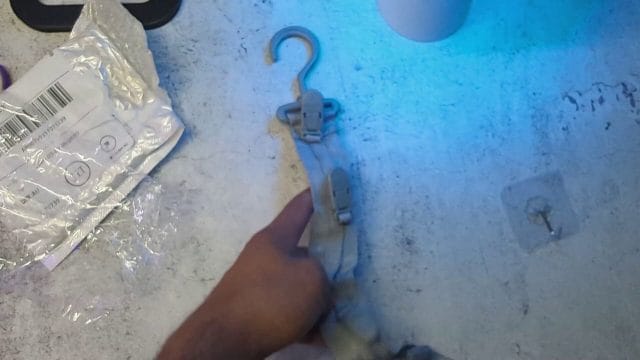
At first glance, the hat rack hanger is a simple fabric strip with several attached clips, designed to let you hang multiple hats one under another. There is nothing overly technical about the product, which in a way is a good sign, because with organisers like this, simplicity often makes them more practical. If the design is too clever or fiddly, people tend to stop using it, but if it is easy to understand and fast to set up, it has a much better chance of becoming part of your daily routine.
The main body appears to be made from fabric, which helps keep the overall unit light and flexible. That matters because a heavy organiser can put extra stress on whatever surface or hook it is attached to. A lightweight fabric strip is also easier to move around if you decide to shift it from one location to another. In a bedroom, wardrobe, office, or hallway, that kind of flexibility is useful, especially if you are still figuring out the best place to store your hats.
The clips are clearly the most important part of the product, because they do the actual holding. If the clips are weak, awkward, or badly shaped, the whole organiser becomes frustrating very quickly. Looking at the product for the first time, I wanted to understand how these clips opened and how much pressure was needed, because some storage clips can feel stiff enough that you worry about snapping them, while others are too loose to be dependable.
Trying to understand how the clip opens
One of the first little challenges during the unboxing and testing process was simply figuring out how to open the clip properly. This is actually a very common experience with small household products, because packaging and product design do not always make the mechanism obvious straight away. Sometimes a clip looks like it should twist, slide, or pull, and if there are no instructions in front of you, the first few seconds can be a small guessing game.
In this case, I initially looked at the clip and tried to work out whether there was a twisting motion involved. The shape makes it look like there might be some rotating part or locking action, so the first instinct was to see whether something needed to be turned. At the same time, I did not want to force it, because that is the fastest way to break a plastic component before you have even started using the product. With cheaper household organisers in particular, it is always smart to pause for a second and check the mechanism rather than applying too much force.
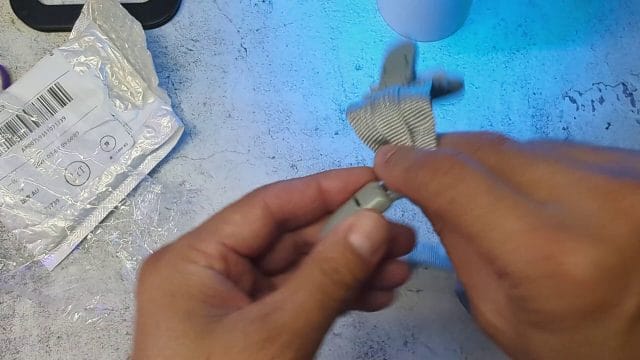
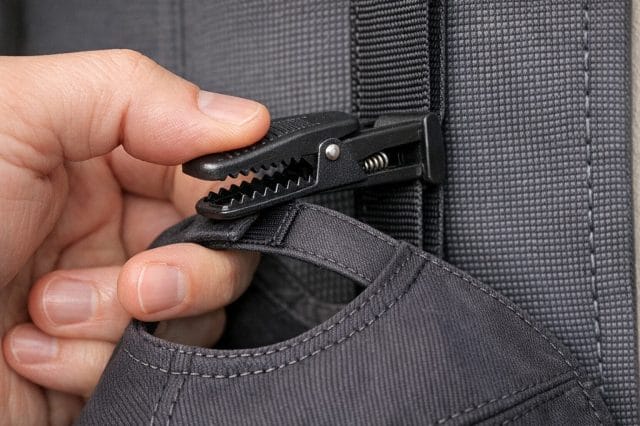
After a closer look, it became clear that the clip worked more like a spring loaded alligator style clip than a twist lock mechanism. That made much more sense once I saw the point where pressure needed to be applied. Instead of rotating the whole thing, the proper way to use it is to press or bend the clip section back in order to open the jaws. This kind of clip is common because it is relatively compact and can grip fabric or thin edges securely without needing any complicated moving parts.
This first moment of confusion is worth mentioning because it reflects the real user experience. When people buy products like this online, they often only see a few photos and a short description, and the actual feel of the item is unknown until it arrives. So if you are considering one of these hat rack hangers, it is useful to know that there may be a brief learning curve, but once the opening mechanism becomes clear, the clip itself is fairly simple to use.
Attaching a hat to the clip
Once I understood the clip mechanism, the next step was to test it with an actual hat. This is where a product like this quickly proves whether it is practical or not, because it is one thing to look at the organiser on its own, but another thing entirely to see how it interacts with the shape, thickness, and material of real hats. Some hats have thick structured brims, some have softer fabric panels, and some have thinner strap areas that are easier to clip.
To attach the hat, the clip needs to be pushed back so the jaws open, then the chosen part of the hat can be inserted before releasing the pressure so the clip closes again. In use, it feels very much like a small alligator clip, which is a familiar and easy enough design once you know what you are doing. The action itself is not especially complicated, although it does help to hold the hat at a thinner section rather than trying to force the clip over a bulky part.
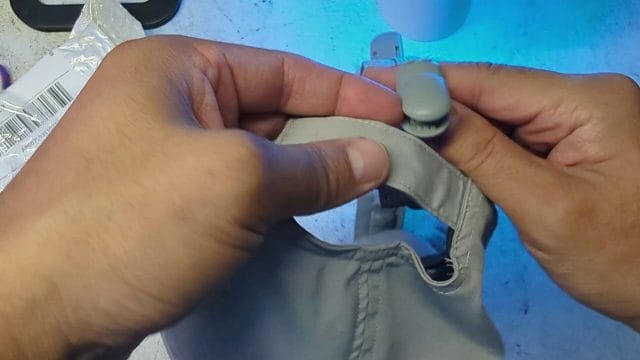
That detail about using a thinner area is actually quite important. Hats vary a lot in thickness, especially around the brim, sweatband, or reinforced front panel. Clipping onto a slimmer section can make the process easier and reduce strain on both the clip and the hat. If you have baseball caps, for example, using the adjustable strap area or a lighter fabric edge may be more convenient than clipping onto the stiffest part of the cap. This also helps the hat hang more naturally.
There was also a mention of turning it ninety degrees and then turning it back, which suggests that orientation matters a little when fitting the hat into place. With hanging organisers, small movements like rotating the clip or adjusting the angle of the hat can make the difference between a neat presentation and a slightly awkward one. Once positioned correctly, though, the hat appears to stay in place in a straightforward and tidy manner.
From a practical standpoint, this makes the hat rack hanger suitable for people who want quick access to frequently used hats rather than storing them away in boxes. If you wear caps for walking, running, travelling, work, or sun protection, being able to clip them onto a visible vertical organiser can save time and reduce clutter at the same time.
The included mounting clip and where you might use it
Another useful part of the product is the additional plastic clip included with the hanger, which appears to be intended for mounting the organiser onto a door or another flat surface. This is an important feature because the usefulness of a vertical organiser depends heavily on where and how easily it can be installed. A good storage product should not require a major setup process, especially for something as simple as keeping hats in order.
The included plastic piece gives a bit more flexibility in placement. The transcript mentions using it on the door or floor, although in practical terms a door is the most likely location for this type of item. Hanging it behind a bedroom door, wardrobe door, or cupboard door makes a lot of sense because it keeps the hats accessible without taking up shelf or drawer space. It also turns an otherwise unused vertical area into functional storage, which is especially helpful in smaller rooms.
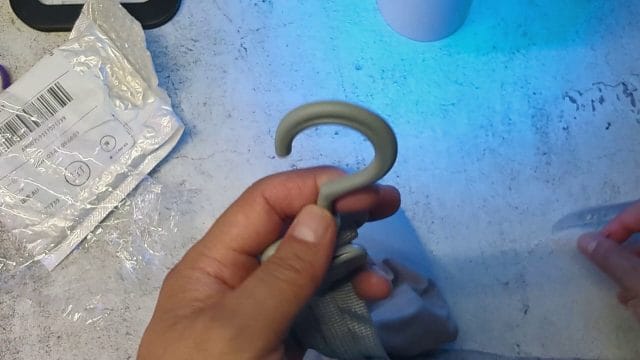
If the mounting clip fits over the top of a door, then installation could be very easy, with no drilling, screws, or adhesive needed. That is ideal for renters or anyone who does not want to make permanent changes to walls or furniture. On the other hand, the long term performance will depend on how secure the clip is and whether the organiser shifts when doors are opened and closed. Lightweight hats should not be much of a problem, but heavier items or overloading the rack could affect stability.
Another possible use is inside a wardrobe, where the organiser can hang from a rod or hook if the design allows it. This would be good for anyone who prefers to keep hats out of sight while still having them arranged in an orderly way. It would also help protect hats from dust compared to leaving them in open areas of the room.
One thing worth checking before buying is the size of your door or intended hanging point. Over the door organisers sometimes work well in one home and poorly in another depending on door thickness and clearance. If the gap between the door and frame is tight, some hangers can cause rubbing or make the door harder to close. That is not necessarily a problem with this specific product, but it is the kind of small real world detail that can affect everyday usability.
How it looks when several hats are hanging
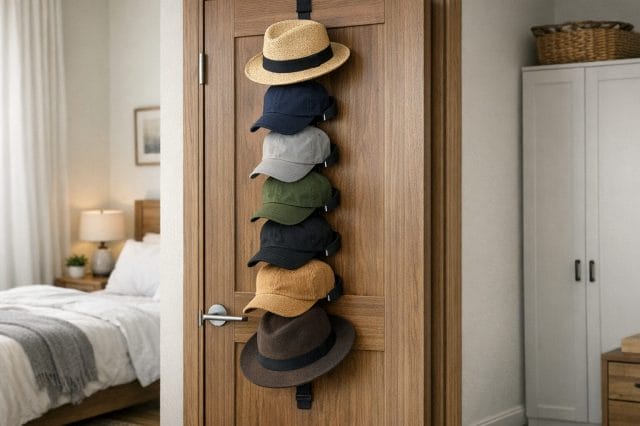
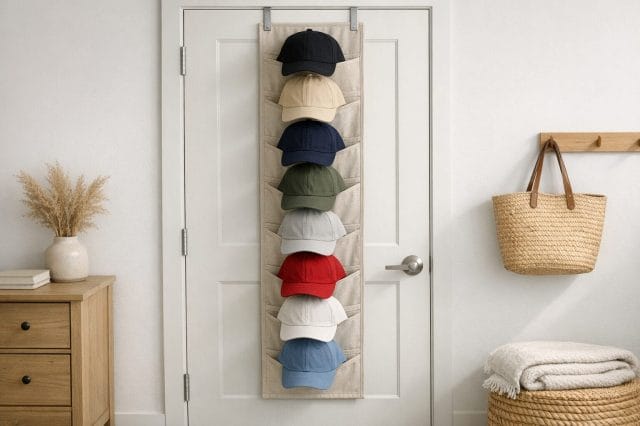
The real test for a product like this is not just whether one clip opens and closes, but whether the entire organiser looks neat and functional when loaded with multiple hats. According to the final part of the transcript, the hats were hung on the rack, showing the intended finished setup. This is where the product starts to justify itself, because a multi hat vertical arrangement is much easier to appreciate visually than a single clip demonstration.
When several hats are hanging in sequence, the main advantage becomes obvious. Instead of spreading across a shelf or forming a pile, the hats are stacked vertically in a narrow footprint. This is an efficient use of space, particularly in smaller rooms, apartments, or shared living setups where storage can quickly become limited. Even if you only own a few caps now, having a designated place for them often helps prevent clutter from building up over time.
There is also a visual tidiness to this kind of organiser. Hats can easily look messy when left casually around the house, but when they are aligned on a single rack, the whole collection appears more intentional and easier to manage. For people who own hats in different colours or styles, it can also be a convenient way to see everything at once and choose quickly before leaving the house.
In terms of presentation, the organiser seems best suited to casual hats such as baseball caps, lightweight fashion caps, and possibly some bucket hats depending on how they are clipped. More delicate or highly structured hats may need a bit more care, because any clip based storage system creates pressure at a single point. For everyday caps, though, that trade off is usually acceptable given the convenience and space savings.
Practical strengths of this hat rack hanger
After looking at the product and seeing how it functions, a few clear advantages stand out. The first is that it is compact and simple. It does not appear to require tools, complicated assembly, or much explanation once the clip mechanism is understood. That is a big plus for household items, because convenience is part of the value. If setup takes too long, many people will avoid using the product altogether.
The second strength is space efficiency. Vertical storage is one of the easiest ways to improve organisation without needing extra furniture. A narrow strip that can hold several hats uses much less space than a shelf or storage box, while still keeping each item individually accessible. This makes it particularly appealing for bedrooms, wardrobes, home offices, or entryways where surface space is already being used for other things.
The third strength is visibility. Unlike storing hats in a drawer or bin, this rack lets you see what you have immediately. That matters more than people think, because visible storage often leads to more consistent use. If your hats are hidden away, you may forget about them or keep buying duplicates. If they are displayed clearly, they become easier to rotate and use regularly.
Another positive point is the lightweight design. A fabric strip with plastic clips should be easy to move, easy to pack, and easy to reposition if needed. For someone who rents, travels between places, or simply likes flexible storage solutions, that kind of portability is useful.
Things to keep in mind before buying
Although the hat rack hanger looks useful, there are a few practical considerations worth keeping in mind. The first is clip pressure. While the clip needs to be strong enough to hold the hat securely, too much pressure could potentially leave marks or create slight deformation over time, especially on softer materials. This may not be a major issue for everyday caps, but if you are storing premium hats or items you want to keep in perfect shape, it is something to consider.
The second consideration is ease of use for repeated access. If you take hats on and off frequently, the clip should be comfortable enough to operate with one hand or at least without too much effort. During the first test, there was a brief moment of figuring out how the clip worked, so new users may need a little time to become familiar with it. Once learned, it seems manageable, but it is not quite as instant as simply placing a hat on an open hook.
The third is weight distribution and loading. Organisers like this usually work best when used within reasonable limits. If every clip is loaded with thick, heavy items, the entire strip may pull more than expected depending on how it is mounted. For normal caps and light hats, this is unlikely to be a serious problem, but using the product as intended is still important for long term durability.
Finally, placement matters. The convenience of the rack will depend a lot on whether you mount it in a sensible location. Too high, and some hats may be awkward to reach. Too low, and longer arrangements may brush against furniture or the floor. The best setup will usually be somewhere accessible, visible, and out of the way of daily traffic.
Who this product is best for
This kind of hat rack hanger is best suited to people who have multiple caps or casual hats and want a tidy, low effort way to store them. If you regularly wear hats for sport, commuting, running, outdoor work, or sun protection, then having them clipped in one vertical location can make your routine simpler. It is also a practical option for anyone trying to improve home organisation without buying larger storage furniture.
It may be particularly useful for small spaces, student rooms, shared homes, and apartments where every bit of storage matters. In those environments, making use of doors and vertical surfaces can be one of the easiest ways to stay organised without making the room feel crowded. The product also fits the mindset of simple entrepreneurship and practical living, where the goal is not to buy more complicated systems than necessary, but to find small affordable tools that make day to day life easier.
On the other hand, if you only own one or two hats, or if you prefer to display hats on shelves for aesthetic reasons, this may be less essential. Likewise, collectors of delicate or premium headwear may prefer a storage option that supports the full shape of the hat rather than clipping it at one point.
Final thoughts
Overall, the hat rack hanger looks like a straightforward and useful organiser that does what it is designed to do, which is often exactly what you want from a product in this category. It gives you a vertical place to store multiple hats, uses a simple clip based system, and includes a mounting option that should help with flexible placement around the home. There is a small learning moment when first figuring out the clip, but after that, the mechanism appears easy enough to use.
What I like most about products like this is that they solve a real everyday problem without demanding much space, money, or effort. Not every useful item needs to be high tech. Sometimes a fabric strip and a few clips are enough to make a room feel more organised and easier to manage. If your hats currently live on desks, chairs, shelves, or in messy piles, then a simple organiser like this could be a worthwhile addition.
Based on this unboxing and test, the hat rack hanger seems to offer practical value for casual hat storage, especially if your priority is convenience and space saving. It is a small household item, but those are often the products that quietly improve daily life the most.

If this article helped you in any way and you want to show your appreciation, I am more than happy to receive donations through PayPal. This will help me maintain and improve this website so I can help more people out there. Thank you for your help.
HELP OTHERS AND SHARE THIS ARTICLE
LEAVE A COMMENT

I am an entrepreneur based in Sydney Australia. I was born in Vietnam, grew up in Italy and currently residing in Australia. I started my first business venture Advertise Me from a random idea and have never looked back since. My passion is in the digital space, affiliate marketing, fitness and I launched several digital products. You will find these on the portfolio page.
I’ve decided to change from a Vegetarian to a Vegan diet and started a website called Veggie Meals.
I started this blog so I could leave a digital footprint of my random thoughts, ideas and life in general.
If any of the articles helped you in any way, please donate. Thank you for your help.
Affiliate Compensated: there are some articles with links to products or services that I may receive a commission.