There is a simple pleasure in tools that do exactly what you need, every single day. The S Biner carabiner sits in that sweet spot where convenience meets reliability. Designed as a double sided carabiner with gates at both ends, it helps you secure items quickly, clip and unclip with minimal fuss, and keep different things separated so they do not tangle or migrate. In this guide, inspired by a hands on look at an S Biner in action, we will dive into how it works, how to test it, and where it shines in daily life from school runs to outdoor errands and weekend tinkering in the garage.
We will also walk through practical testing steps you can do at home to check gate tension, slider locks, and load handling, along with care tips and safety advice. If you have ever wondered whether a double gate design is worth it, or how to get the most from a small piece of hardware, read on.
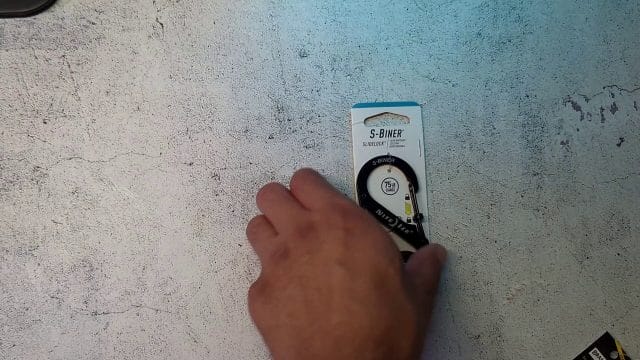
At first glance the S Biner looks familiar because it borrows the basic idea of a carabiner. It is the double gate and twin compartments that set it apart, not just visually but functionally. That S shape is more than a stylistic flourish. It allows you to clip one side to an anchor point, and the other to your item, with both ends capable of locking. In other words you can create a secure link that is quick to alter but steady when you need it to be.
[Image generation failed for prompt: A close up photograph of a stainless steel S shaped double gate carabiner clipped to a rugged canvas rucksack strap, with both small black sliders pushed down to the locked position, shot in natural daylight with shallow depth of field and visible brushed metal texture.]
What Is an S Biner Carabiner and Why Use One
An S Biner is a double gated carabiner with two opposing spring gates housed within an S shaped frame. Each gate can open independently, and on lockable models each gate has a small slider that you push down to lock or push up to unlock. In essence it gives you two secure attachment points in a slender, pocketable form.
Where a traditional single gate carabiner turns a loop into an open hook, the S Biner creates two loops. This adds versatility. You can attach the top gate to a fixed point such as a bag handle, belt loop or wall hook, and then use the bottom gate to clip and unclip items. Because each side locks, you can secure both the anchor and the item against accidental opening. That gives you confidence when carrying things that are awkward, heavy for their size, or prone to snagging.
Everyday Uses People Love
One of the clearest examples from daily life is the school run. Many schools ask pupils to bring indoor shoes or training shoes in a separate drawstring bag. That extra bag can be a nuisance to manage with small hands, coats, water bottles and books in the mix. Clip an S Biner to the main school bag and you instantly have a tidy way to hang the shoe bag from the outside. It stays put on the walk, and the shoes can air a little instead of being buried inside the main compartment.
Beyond school, S Biners are handy for:
- Commuters who want to clip a small lunch bag or umbrella to a rucksack.
- Parents who need to attach a toy, a hat, or a snack pouch to a buggy or tote.
- Dog owners who carry a small waste bag dispenser or a collapsible water bowl on a lead.
- Campers and walkers who want to hang a torch, a water bottle, or gloves from a pack.
- Home organisers who hang keys, torches, and small tools on a garage board.
The double sided nature of the S Biner turns these everyday tasks into a single click movement. Clip one side once and leave it there as a semi permanent anchor. Clip and unclip the other side as needed without disturbing the anchor at all. This may sound minor, but it cuts down on repeated handling that wears out straps and zips, and it reduces the chance that your anchor side will come loose when you are in a rush.
Anatomy of the S Biner: Gates, Sliders, and the S Frame
Let us look closely at how the S Biner works. The body is usually made of stainless steel or strong plastic. The steel versions tend to be slimmer for the same strength, and they resist everyday knocks and scratches well. Each half of the S contains a spring loaded gate that opens inward. On locking models there is a small black slider on each gate. Sliding this downwards moves a notch over the gap, preventing the gate from opening. Sliding it upwards frees the gate to move as normal.

The beauty of this arrangement is its simplicity. To clip the carabiner on, press the gate inward with your thumb to create an opening, slip it over the strap or ring, and then let the spring gate snap closed. When you want to secure it so it cannot be pressed open inadvertently, push the black slider down until you feel a tiny stop. That is the gate locked. To open again, push the slider up with a fingernail or thumb pad. The slider has a light but positive feel so you can operate it even in chilly weather or with thin gloves.
A well made S Biner has a clean gate action with a satisfying snap when closed, and the slider should travel without grinding. If you feel roughness, there may be grit caught in the track, or the slider might be out of line. We will cover maintenance later, but in general a quick rinse and dry will keep the mechanism sweet.
[Image generation failed for prompt: A labelled studio diagram of an S shaped double gate carabiner on a white background, arrows and captions indicating the stainless steel frame, top gate, bottom gate, and black locking sliders, with magnified insets showing the slider in locked and unlocked positions.]
Locking and Unlocking in Practice
On many days you may use your S Biner without locking the gates at all. The spring tension is enough to keep light items in place, and it speeds up transitions. Yet when you are carrying items that could snag a door frame or brush against a chair arm, locking both ends offers peace of mind. Push the slider all the way down on each gate and give the gate a light tug to ensure it is pinned shut. The key advantage is that you can lock just one end or both ends, whichever suits the task.
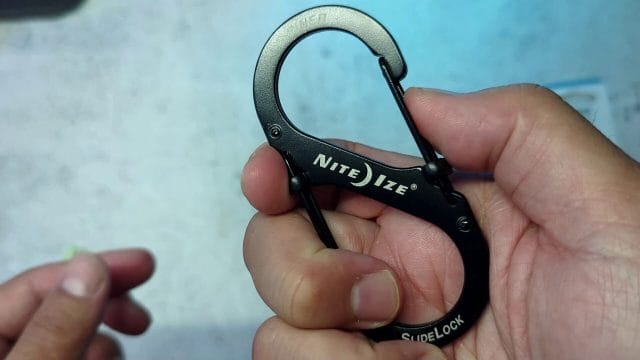
Consider a commute by train where you clip a travel mug on the outside of your bag. Lock the gate that connects to your bag strap, and leave the gate facing the mug unlocked for quick access. Later on a crowded platform, lock the outer gate as well to reduce the chance of a knock sending your mug to the floor. The ability to change the state of each gate independently is central to the S Biner ethos keep the anchor constant, flex the connecting side as needed.
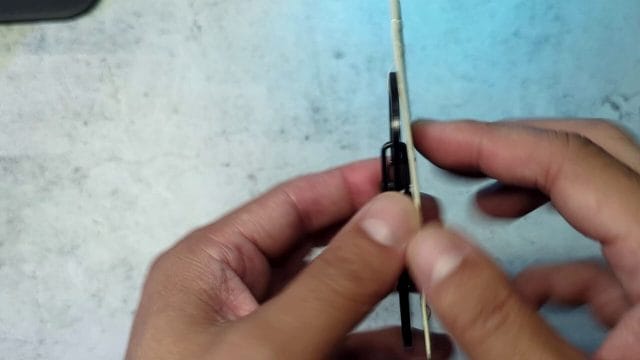
In the hand, you will notice that the sliders move in the same direction on both gates when the S Biner is held upright. That makes operation intuitive. Down means locked, up means free to open. On the bag it is obvious at a glance whether one side is safe or ready to open.
How It Looks and Hangs on a Bag
While function is the priority, how a clip hangs matters too. You want weight to sit in a way that does not strain straps or dig into your side. The S Biner makes it easy to find a natural orientation. Clip the top gate to the strongest point of the bag strap or a built in D ring, then hang the item from the bottom gate. In this position the S shape curves around the strap and keeps the lower gate facing forward for easy access.
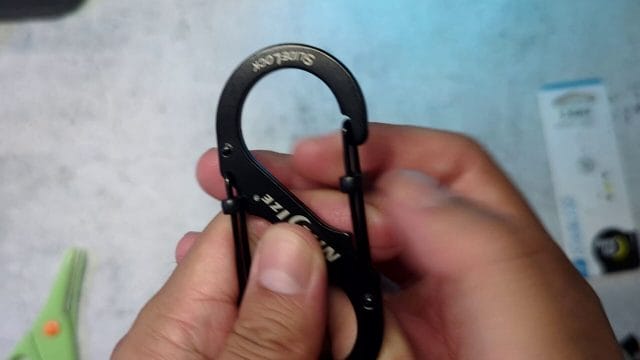
In the school example, the top gate sits on the main bag strap while a shoe bag hangs from the bottom gate. As the child walks, the bottom bag can swing freely without twisting the top clip open. If both gates are locked, even a jostle in the cloakroom will not dislodge it. Another benefit is that the lower gate remains clear to open without disturbing the upper connection. At home, when the bag gets hung on a peg, the S Biner stays in place ready to go next morning.
Choosing the Right Size and Material
S Biners come in several sizes, usually numbered with smaller numbers for smaller frames. The choice depends on what you plan to carry, and where you will attach it. Stainless steel models are excellent for daily use because they combine strength and slimness, and they resist the weather. Plastic versions can be useful for lighter items or where you prefer a bit of flex or a splash of colour.
When choosing size consider:
- The thickness of the strap or ring you will clip to. The gate must open wide enough and the inner curve should sit well around it.
- The weight of the item you intend to carry. Check the working load stated by the maker. Use plenty of margin in your choice and avoid pushing limits.
- The space you have on the bag or belt. A slimmer S Biner is tidier and less likely to snag, but do not go so small that operation becomes fiddly.
- Whether you want the locking sliders. Some models are non locking and lighter, others include sliders that offer more security.
Always read the maker information about working loads. Many S Biners are rated for light to medium gear only. They are not designed for life critical loads. If you need something for climbing or fall protection, buy equipment rated for that purpose and follow safety rules without compromise.
Safety Notes You Should Not Ignore
It is tempting to assume that a sturdy little clip can do any job. Treat an S Biner as a convenience clip, not a safety device. Never use it for climbing, abseiling or similar activities. Do not suspend a person or heavy load above people with it. Do not connect it in a way that pries the gate sideways or puts sharp edges against it. The S Biner is fantastic in daily roles when used within its limits. Respect those limits and you will be delighted with its convenience and longevity.
Testing Your S Biner at Home
Testing does not have to mean laboratory equipment. You can perform a series of simple practical checks in your kitchen or garage to judge whether your S Biner is operating correctly and safely for its intended use. Here is a sensible approach that covers action, security and durability.
1. Gate Action and Tension
Open and close each gate ten to twenty times. Feel for smoothness. The gate should open with moderate pressure and snap closed crisply. When closed it should sit flush against the frame with no obvious gap. Compare both gates. They should feel broadly similar in resistance and snap. If one gate is lazy or does not fully close, the spring may be deformed or obstructed. That gate is not safe to rely on until you resolve the issue.
2. Slider Lock Function
With the gates closed, slide each lock down to the locked position. Attempt to press the gate open with thumb pressure. It should not move. If you can force it open easily with the slider in the locked position, do not use that gate for anything important. Unlock and lock again to check whether it was user error or a genuine fault. A tiny wiggle under heavy pressure is expected, but the gate should remain shut. You can also bump the side of the gate gently against your palm to simulate a knock. It should remain closed when locked.
3. Shake Test on a Bag
Clip the top gate to your bag strap and the bottom gate to a shoe bag or similar item, then lock both ends. Shake the bag lightly side to side. Listen and look. The gates should not rattle open and the item should remain centred in the gate. Now unlock the bottom gate and do the same. The item should stay in place under gentle motion thanks to the gate tension and the loop shape. Repeat with the top gate unlocked while holding the item steady. This simulates knocks in everyday use and shows whether the spring is doing its job.
4. Static Load Test with Household Weights
Gather a few known weights, such as a filled water bottle, a bag of rice, or a dumbbell. Clip the top gate to a sturdy handle or rung, clip the weight to the bottom gate, and lock both gates. Gently let the weight hang and hold it with the other hand in case of failure. Observe for a minute. Look for any bending or gate movement. If all looks good, remove the weight. Do not exceed the maker rated working load. You are testing basic function and security, not pushing to the limit. Repeat with a different attachment point to see how the S Biner behaves when clipped to thicker or thinner anchors.
5. Gate Slip and Alignment
Sometimes the gate can slide off a narrow loop when rotated, especially if the item is thin and hard, like a key ring. Test by clipping a small ring to the bottom gate and rotating it slowly through a full circle. The ring should ride within the gate without catching on the tip and forcing it open. If you notice a catch point, choose a different connection method, such as a slightly larger ring or a strap, or consider flipping the orientation so the potential catch sits at the top where it is less likely to be loaded.
6. Corrosion and Dirt Resistance
If you use your S Biner in the rain or near the sea, test how it handles moisture. Lightly mist the gates with water and let them dry naturally. Open and close the gates a few times. They should feel the same as before. If there is any grittiness, rinse under a tap and dry with a cloth. Stainless steel resists rust well, but salt can leave deposits that make the sliders drag. Occasional rinses help extend the life of the sliders and springs.
7. Abrasion Check
Inspect for rough edges where the frame meets the gates. Run a piece of spare strap or ribbon across the inner curves under light tension. It should glide without snagging or fraying. If you feel scraping, there may be a burr. You can smooth a minor burr with very fine abrasive paper, but be gentle and avoid the gate contact points. If the burr is pronounced and near the gate, consider retiring the clip for sensitive fabrics.
Tips for School and Family Use
For parents, the S Biner can be a game changer on busy mornings. Attach one permanently to your child’s main school bag and teach them how to use the sliders. A quick routine helps:
- Clip the top gate to the bag once and leave it there.
- Lock the top gate so it cannot open when the bag is lifted or dragged.
- Clip the shoe bag or kit bag to the lower gate before leaving the house.
- Lock the lower gate for the journey to school.
- Unlock the lower gate when you want quick access at the lockers.
A few rehearsals will make it second nature. Children enjoy the small tactile action of sliding and clicking. It gives them a sense of order and responsibility for their gear. Choose a size that is easy for their fingers to manage and avoid overly small clips that become fiddly with gloves.
Common Mistakes and How to Avoid Them
Nearly all problems with clips come from two sources misuse and overload. To keep your S Biner running smoothly, avoid these pitfalls:
- Do not lever the gate sideways against hard edges. The gate is designed for inward deflection, not twisting.
- Do not exceed the working load. If you need to carry heavier items, step up in size or use a different connector rated for the task.
- Do not clip around sharp edged metal where the inner curve could be scored. Use a fabric loop or smoother ring instead.
- Do not ignore stiffness or roughness. If the slider feels gritty or the gate does not snap shut, clean it before further use.
- Do not rely on an unlocked gate for high value items in crowded environments. Use the sliders when security matters.
Care and Maintenance
S Biners are low maintenance, but a little attention keeps them in top shape.
- Rinse with fresh water after exposure to salt or grit. Shake dry and wipe with a cloth.
- If the slider track feels sticky, brush it gently with a dry toothbrush to remove particles. Avoid oil that can attract dust. If absolutely necessary, a tiny drop of dry lubricant can help, but keep it away from fabrics.
- Inspect the gate tips for wear. The very end of the gate is critical to a secure closure. If it is blunted or bent, retire the clip from important tasks.
- Store in a dry place. Although stainless steel resists corrosion, springs and sliders appreciate a dry rest between wet outings.
Alternatives and When to Choose Them
The S Biner is a brilliant generalist. Yet there are times when a different connector is better:
- Traditional single gate carabiner: Simple and robust for one to one connections where you do not need separation between anchor and item.
- Quick link with screw sleeve: Better for semi permanent attachments and higher static loads, though slower to open and close.
- Split ring: Good for keys and items that you rarely remove, but fiddly to attach and detach often.
- Webbing strap with buckle: Best for heavy or awkward loads that need secure tightening around a bar or frame.
Use the S Biner when speed and flexibility are the aim. Use fixed connectors when you want to set and forget with maximum security.
Organisational Hacks and Creative Uses
Once you start using S Biners, you will find new jobs for them everywhere. Here are a few ideas to spark your imagination:
- Create a modular key set. Clip your car key on one side and house keys on the other. Unclip car keys when you hand them to a mechanic without disturbing the rest.
- Build a hanging station near the door. Fix a small rail or hooks, clip S Biners to that rail, and hang masks, bike lights, or gloves for grab and go convenience.
- Tame earbuds and small cables. Loop the cable, clip it with the lower gate, and hang it from the side of a monitor arm or desk shelf.
- Keep water bottles upright in a bag by clipping the neck to an internal ring, leaving room for other items to slip around without pinching the bottle.
- In the garden shed, hang garden gloves from a belt loop while you work, clipping tools to the other side as needed.
These small organisational wins add up. The more you structure how your items connect, the less time you spend rummaging, untangling, or heading back to fetch something you dropped.
Frequently Asked Questions
Are the locking sliders essential
Not always. If you carry only light items in calm settings, a non locking S Biner may be perfectly fine. Sliders shine when you expect jostles, when you carry items on the outside of a bag in crowds, or when the items are valuable or easily lost. They also help if children will use the clip and you want to reduce the chance of accidental opening.
How do I stop the slider from feeling stiff
Stiffness usually comes from dirt. Rinse under warm water, brush the track with a dry toothbrush, and dry thoroughly. Avoid oils that can attract more grit. If you still feel resistance, move the slider up and down a dozen times to bed it in. Sometimes brand new sliders loosen slightly with use.
What size should I choose for a school bag
Choose a size that opens wide enough to clip over the main strap easily, with enough inner space for the strap to sit without pinching. You should be able to operate the gates with gloved hands in winter. A mid size stainless steel model suits most primary and secondary school bags.
Is stainless steel better than plastic
For most uses, yes. Stainless steel is more durable and slimmer for the same strength. Plastic can be kinder to delicate items and is available in bright colours that children enjoy, but it can flex more over time. If in doubt, choose stainless steel for daily carry.
Can I use an S Biner for dog leads
Yes, for light accessories like a waste bag holder or a small torch. Do not use an S Biner to attach a lead to a collar unless the maker specifically states that model is suitable for that purpose. Leads and collars for dogs should use purpose built clips tested for sudden loads and twists.
What if the gate gets bent
If a gate is visibly bent or no longer closes flush, do not bend it back and continue to use it for important tasks. The spring may have been damaged. Retire it for very light duties or recycle it if your local scheme accepts metal hardware, and replace it with a new one for essential carry.
Will it damage fabric straps
Used properly, it should not. The inner curves are smooth and the gate tips are rounded. Avoid clipping through metal eyelets with sharp edges or through very thin straps in a way that concentrates pressure on a tiny area. If you see wear on a strap, choose a thicker anchor point or add a small loop of webbing to distribute the load.
Putting It All Together
What stands out about the S Biner is how it streamlines small tasks. The double side design means you are not constantly unclipping and reattaching the anchor point. The locking sliders give you the option of extra security when you need it, and the slim profile disappears into your bag setup until called upon. When you hold one in hand and feel the gates snap and the sliders click into position, you can sense the attention to detail that separates a truly useful tool from a novelty.
In our practical exploration, we watched an S Biner move from desk to bag to hallway peg, handling a shoe bag without fuss, and locking securely with an easy push of the thumb. The test steps above mirror the real rhythms of home and school life. Gate action, slider lock, shake tests on a bag, and a modest weight check tell you more about reliability than any spec sheet. For most people those simple checks are all that is needed to trust an S Biner with daily carry items.
Before you rush to clip everything in sight, take a moment to set up smartly. Pick the right size and material, place the anchor once and leave it there, and treat the S Biner as a helper rather than a heavy duty connector. A tiny bit of maintenance will keep it smooth and a little discipline with the sliders will keep it secure. From there it is all benefit faster routines, fewer lost items, and neater bags.
[Image generation failed for prompt: A lifestyle photo of a tidy hallway with a timber coat rack, a child’s school bag hanging from a hook with an S shaped double gate carabiner on the strap holding a small shoe bag, warm morning light and a pair of trainers on the floor.]
Final Thoughts
The S Biner carabiner is proof that small design choices can make a big difference. Two gates rather than one, a pair of simple sliders, and an S shaped frame that turns a plain clip into a flexible organiser. Whether you are setting up a school routine, organising a garage, or simply trying to keep a travel mug within easy reach, this little helper can make each day smoother.
Use the guidance in this article to understand how your S Biner works, to test it sensibly at home, and to integrate it into your daily system. If you invest a few moments to choose the right size and to adopt the habit of locking when it matters, you will get a long service life and a surprising amount of satisfaction from a tiny piece of hardware. Simple, reliable, and quietly effective that is the charm of the S Biner.

If this article helped you in any way and you want to show your appreciation, I am more than happy to receive donations through PayPal. This will help me maintain and improve this website so I can help more people out there. Thank you for your help.
HELP OTHERS AND SHARE THIS ARTICLE
LEAVE A COMMENT

I am an entrepreneur based in Sydney Australia. I was born in Vietnam, grew up in Italy and currently residing in Australia. I started my first business venture Advertise Me from a random idea and have never looked back since. My passion is in the digital space, affiliate marketing, fitness and I launched several digital products. You will find these on the portfolio page.
I’ve decided to change from a Vegetarian to a Vegan diet and started a website called Veggie Meals.
I started this blog so I could leave a digital footprint of my random thoughts, ideas and life in general.
If any of the articles helped you in any way, please donate. Thank you for your help.
Affiliate Compensated: there are some articles with links to products or services that I may receive a commission.