The alarm goes off before dawn and the world is still quiet enough that the layers of sound have not yet stacked on each other. I lace my shoes and step out into a street that belongs to the early risers. It is six in the morning and the city is already shrugging off its sleep, beginning to stir and hum, yet there is a gentle openness at this hour that makes a run feel possible and welcome. An early morning run is not just about avoiding traffic, it is a way of meeting a place before it fully becomes itself, a way of hearing what it has to say without interruption. The sky sits in a pale wash above the buildings, and the air feels new, as if the day has only just been printed.
There is a low breeze that flows like a river across the wide streets, and as I begin to jog, the cadence of my feet finds a rhythm with the sweep of it. I tell myself this will be a busy day with plans and appointments and all the movement of travel layered on top of city life, and that is exactly why I run now. I run because time is about to accelerate and fragment, and running brings everything back into a single line. It quiets the mind, focuses the breath, and offers a simple narrative of forward motion. The early morning encourages commitment. It is easier to start when the world seems like it too is beginning again.
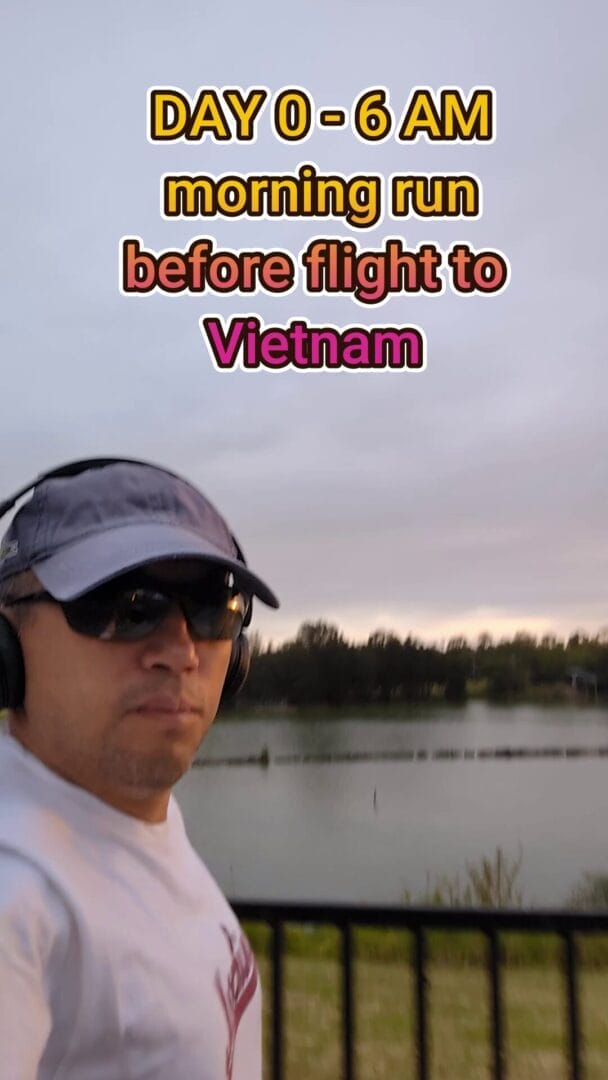
On the first day in Vietnam I head out while the light is soft and the noise is low. The traffic is still sparse compared to the tall waves of movement that will roll through later. A handful of cars, a few buses, a scatter of motorbikes, and the occasional bicycle, each threading through the lanes with the familiar improvisation of city travel. I glance down a side path and catch something charming and unexpected. A line of small ducks waddles across the footpath with the straightforward patience of animals that know their route. They are exactly where they want to be, crossing as if this were the only task they had. It is a reminder that the city belongs to more than people and machines, and that the soft details carry a surprising power. It is easier to run when the world offers you smiles that do not need translation.
I know that the rhythm of running in Vietnam will be measured by more than the ticking of seconds. It will be measured by the fluctuation of traffic across the day, by the heat that rises and recedes, by the smells from kitchen stalls and coffee carts, and by the patterns of people moving through their lives. I keep my course light and changeable, ready to cross when the opening appears. Crossing a road here means stepping into a dynamic stream with a strong sense of eye contact and shared understanding. The aim is to be visible and predictable, to hold a steady pace and to trust that everyone else is reading your intentions. There is a grace to it when the timing is right, a briefly choreographed exchange of decision and courtesy.
At one corner the day surprises me again. I jog past a woman who is shouting, loud and sharp and completely consumed by whatever she is feeling in that moment. Her voice rings across the pavement and I look quickly to see whether anyone is approaching her to help, but people are keeping their distance. I slow and scan, not sure if it is pain or frustration or something else entirely. The city is full of stories that spill into the open for a few seconds and then disappear down the next alley. I move on and make a mental note to stay present, to watch my environment closely, and to remember that a runner is not a spectator but a participant with responsibilities. Running in a new place requires kindness, patience, and awareness, not only of traffic and surfaces, but of people and the sometimes unpredictable scenes that appear without warning.
Second morning in the same streets
When the second day arrives, I step out again at six, and the city is already in a different mood. The early hour does not guarantee quiet in a city that loves movement. The roads are busy even when the sun has only climbed a small arc. This is the nature of a place that balances the routines of work with the insistence of culture and community. The morning carries energy in its shoulders. There are more cars and motorbikes than yesterday, and the air settles into the texture of warm exhaust and fresh coffee. I choose a route that allows me to stretch the legs without the newly sharpened rush of traffic pressing too close. The lungs feel strong and the mind is bright. A good song of motion builds as the feet tap their way up and down the pavements.
I decide to explore, and soon I find an outdoor park, a green pocket that has been shaped for exercise and social life. There are pull up bars that invite tests of strength, and small stations where simple routines help people to wake their bodies. There are benches and paths and patches of shade where stretching feels natural. It is the kind of space that proves how easily a community can gather around the shared intention of movement. A place like this is an anchor for health. The presence of others is inspiring. I watch a man in his sixties curl up and reach toward his toes with a focus that would impress any athlete. A young woman practices slow, controlled moves that force the muscles to lean into their work. A couple walks together, speaking quietly, hands brushing like a heartbeat.
Another day features a weekend morning, and the shift is evident. It is almost seven and the city is fuller now, but the energy of the weekend carries a different rhythm. The morning is busy but not rushed. Families walk along the paths, some with small children who peer at the equipment with big eyes. Friends stand in clusters to chat between sets of exercises. There is laughter and there are greetings, and the whole place feels like a friendly market formed around the idea of movement. I commit to ten kilometres and settle into a breathing pattern that allows me to absorb the scene without losing pace. When the miles stretch out, the presence of others becomes an important companion. These parks have their own quiet language. It tells you that it is normal to challenge your body, normal to make time for yourself, normal to try and keep your heart strong.
Around the edge of the park, a group of older women performs a slow and concentrated series of movements that resemble Tai Chi. The tempo is measured and the limbs float and settle, the breaths lengthen, the faces relax into an expression that feels both alert and meditative. These practices are lessons in balance that any runner can carry. They teach patience and alignment. They invite the joints to be supple and the mind to be calm. A short distance away, other women sit in a neat row, eyes closed, hands resting lightly, the ocean of sound lapping at the edges of their attention. They are meditating, and the sense of quiet that surrounds them is contagious.
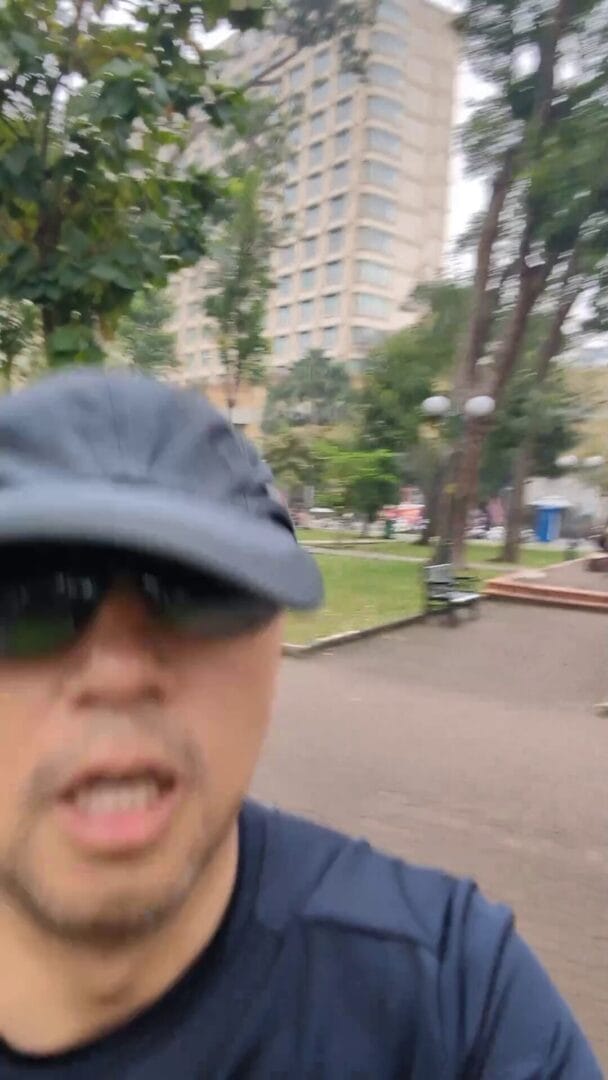
There is something powerful about being outside with others who are choosing to use the morning as a place of health. It is not necessary for everyone to share the same activity. Some walk, some stretch, some breathe deeply, some lift, some sit quietly and let their attention expand and settle. The plurality of approaches is in fact the strength. A runner can borrow a little stillness from a group in meditation. Someone practising standing balance can borrow a little stamina from a runner passing by. The park becomes an ecosystem of beneficial behaviours, each reinforcing the others without asking for anything in return.
The simple pleasure of food after a run
Running is most satisfying when it is paired with the rituals that follow. One morning I find myself nearing a small stall where the scent is warm and encouraging. I have been moving along the way for a few kilometres and I begin to think of a simple breakfast, something fresh and local that sits well after a morning run. A banh mi sandwich is a perfect reward. The crispness of the bread, the soft savoury meat, the bright pickled vegetables, the herbal lift of coriander, and the clean rush of heat from a little chilli. Carrying it in hand after the run makes the simple pleasure feel heightened. Food tastes different when earned through effort. The city makes sure you do not forget that a run is not only about the miles but about the way it changes the flavour of life.
Sundays bring a different character to the roads and paths. More runners appear, their stride patterns cutting through the morning with a gentle clarity. There is a sense of community that comes alive when you catch and pass others moving. We nod, we exchange small smiles, and the morning grows brighter simply because we are all doing something similar. Crossing the road feels easier when there are more people to share the risks and attentiveness. The ebb and flow of movement creates brief alliances, and then they disperse naturally as everyone reaches their own turn offs and goals.
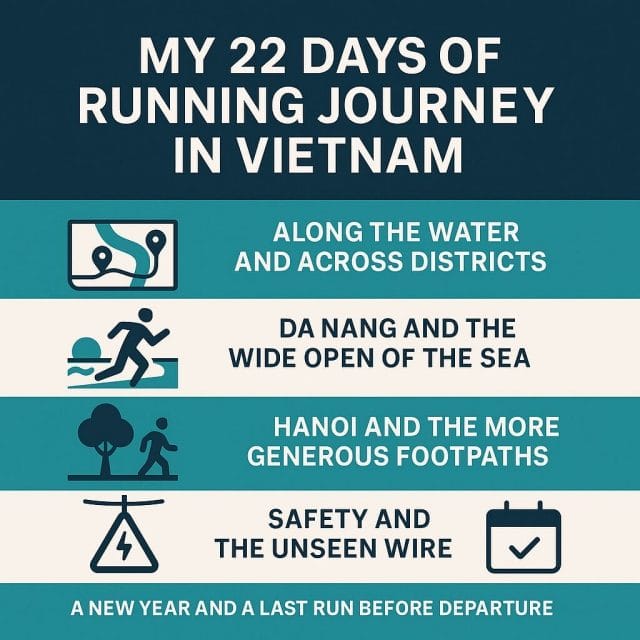
Along the water and across districts
Another early morning finds me near a river, or perhaps a creek, a slow ribbon of water winding its way through the neighbourhood. Running along water always alters the experience. The air carries less heat, the sound settles into a soothing pattern, and the view opens. Reflections of buildings slide across the surface as the light shifts. Birds dart along the edge and sometimes perch on lampposts like small ornaments. There is an easy companionship between the runner and the river that has nothing to do with speed or distance. It is about the acceptance of a route that embraces openness. Even when the city is not yet fully awake, this kind of view helps you stand outside the busy grammar of traffic and noise.
I have a plan to circle the area and keep the run light. The distance will not reach five kilometres this time, not all runs need to stretch into rows of numbers to be meaningful. The body does not always want to push. Sometimes the intention is simply to maintain a habit, to allow the mind to recognise its rhythm and to keep the joints mobile. It is a small run with a solid heart. Around me, people begin to appear in greater numbers, and I notice that in district two there are more runners and walkers than in district one. The difference is noticeable. The sidewalks feel friendlier and the number of gym groups seems higher. Perhaps it has to do with the proximity to certain parks and the river. Perhaps it is simply the local patterns of morning life. Whatever the reason, the sight of more runners creates a comfortable cloak of solidarity.
District one is famous for its pace, for the density of commerce and the layered lines of people on the move. Running there feels like stepping into the centre of a complex dance. The footpaths can be narrow, the curb cuts sometimes uneven, and the traffic is a constant presence. There is an exhilaration in this form of running. It tests you. It asks for concentration and resilience. District two offers another character, with spaces that invite exercise and stretches of path that soften the demands of navigation. Moving between these districts is like trying on different coats of energy. Both have value. Both teach important lessons. You run the city you are in, and you learn to adjust without fuss.
One of the last runs in Saigon brings me back to a designated running park, a place where the intentions of fitness have been built into the design. The morning is busy with people exercising. There are runners lapping the perimeter, walkers pacing in pairs, and small groups gathered around equipment. The weather is generous. The warmth holds to the skin but does not overpower. The sun comes forward without pressing. It is a good day to conclude a chapter of running in a city that has offered me routes, sounds, small surprises, and many lessons. As I finish the final loop, I stand for a few breaths and allow the idea of a next destination to settle. It is time to carry this daily practice into another city, another set of paths, another collection of early mornings.
Da Nang and the wide open of the sea
In Da Nang the coastline stretches like a long ribbon that invites feet to keep moving in a straight line. The beach is a soft field of sand that reminds you to be measured and careful with joints. The air feels different here. There is salt in the breath and a smoother quality to the breezes that drift along the surface of the water. On a day when cloud has draped itself across the sky, the light is gentle and the temperature less insistent. It makes a run more comfortable. Five kilometres feels achievable without the need to negotiate with heat. The beach offers its signature rhythm. Waves gather themselves, lift, curl, and roll forward to meet the sand, then withdraw with a hush that feels like a repeated lullaby. The runners who move along the path absorb this rhythm without trying. It is a background music that makes the act of running feel both grounded and open.
There are mornings when the time is still earlier than usual. Near five o clock I step out because I have plans to reach the hills that rise beyond the city, and I do not want to carry an unused run into the day. The discipline of an early morning feels like a partner in travel. It has a way of keeping the mind clear across the changes, keeping the body resilient even when tiredness tries to settle. I decide not to run along the beach this time. Instead I take a route through quieter streets where the inclination to climb presents itself. These streets tell a different story about the city. They speak of local lives at rest or just waking, with shutters half open and small shops preparing to lift their doors. The quality of quiet in a city at five is honest. It can be as powerful as any session of meditation. Every footfall in this hour is a nod to commitment.
Then the weather changes and the rain begins as a thin sprinkle. The few drops do not demand shelter, but they do ask for consideration. I decide to keep my shoes dry and slip on latex covers that stretch over the toes and heel, sealing the shoes against the water. It is an unusual sensation, as if the foot has put on a slim raincoat. Some runners will argue that wet shoes are part of the process and that the body will warm itself regardless. Others will insist on the comfort of dryness for the sake of the skin and the joints. In this moment I choose dryness. The covers grip well and the walk to the start of the run feels secure. The experiment is simple. Do these covers truly keep the shoe dry through a light sprinkle. After a few kilometres I check the socks and find them still dry. The small victory is satisfying. This is what running teaches repeatedly, that small choices add up and that small successes matter.
Another early morning in Da Nang brings me back beside the beach. There is a clear stretch of path where the sea unfurls like a long scroll of silver. Five kilometres in this setting feel like a conversation with the horizon. I keep my shoulders relaxed and my breath gentle. The plan for the day includes travel to Hue. That plan sits behind the run like a quiet passenger. There is a sense of movement stretching ahead even after the morning miles are done. Running before travel makes the hours in transit feel calmer. It is easier to sit when the body has already kept its promise to move. It is easier to absorb the subtle anxieties of departure when a run has softened the edges of the mind.
Hanoi and the more generous footpaths
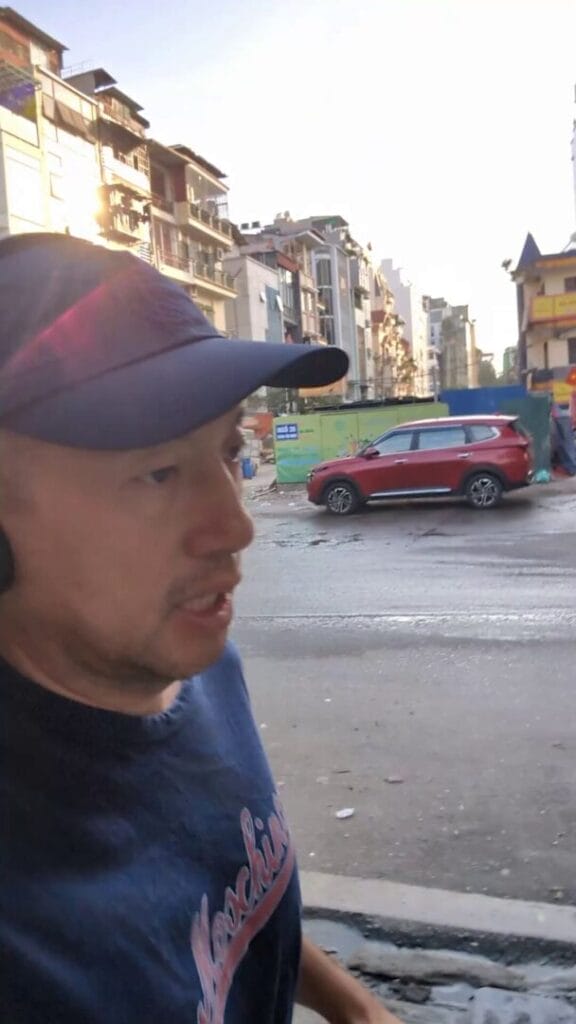
Hanoi greets runners with footpaths that are wider and more forgiving. This simple change alters the running experience at once. The shoulders relax because the elbows no longer feel as if they are dodging sharp corners and incoming mirrors. The eyes rest a little because the path offers room for minor adjustments. Five kilometres ventures out with a certain confidence. The city’s mood feels cooler, not only in temperature but in tone. The connection to lakes and shaded streets is strong here. The trees seem older and the water acts as a welcome neighbour who knows just when to appear with a calm word. The early run allows me to see how the city breathes differently from Saigon and Da Nang. The breaths are softer, more measured, less exposed to heat, and more willing to settle into the rhythm of a longer run.
There is still caution to be practised. Even generous footpaths can display uneven patches, lifted bricks, small holes where roots have pushed up, or sections where drainage has eroded the surface. Motorbikes appear from small driveways with quick intent, and sometimes the line between footpath and vehicular space blurs. Running requires a double attention here. One eye remains on the ground to secure the ankles against a rolling hazard. The other eye sweeps the edges to anticipate any quick entries from a side alley or a building entrance. It is a balance achieved through practice. The body learns to track multiple inputs without panic. The posture remains upright, the breath remains smooth.
The city gives gifts to runners who rise early. One morning I find myself joining a path around a lake, the kind that sits like a polished piece of mirror in the centre of the neighbourhood. Fourteen degrees is the perfect partner for a longer run. The air is cool enough to allow the lungs to deepen without strain, yet not so cold that the body stiffens. I decide on ten kilometres and set the cadence accordingly. The path curves in generous arcs and the water provides a constant set of soft images. Couples walk with slow companionship, groups of friends stand with coffee cups at the edge of the path, older people practice gentle exercises beside the trees. The experience is both personal and communal. A lake run always holds these layers. It is one of the strongest forms of running for the mind, because it combines beauty with structure, and it invites a steady pace that does not overstretch.
Handling the choppy and the unexpected
Conditions are not always smooth, even when the water is calm and the air is cool. The surfaces can introduce small shocks later in the day, and occasionally a section of run will present a choppy feel, a slightly broken rhythm caused by obstacles and unevenness. The goal is to accept that this is normal. Running is not a laboratory experiment with perfect inputs and outputs. It is a friendly but demanding routine that asks you to adjust often and with good humour. Perseverance is not simply about finishing. It is about staying steady across changes. When the run begins to break into less comfortable pieces, the technique holds you together. Arms remain aligned, shoulders stay loose, core remains engaged, breath is unforced, and the gaze scans without hardening. This is the craft of running, assembled through many mornings and many miles.
Safety and the unseen wire
One morning a hazard appears that requires a swift lesson. I am crossing a small island in the middle of a street, a slender refuge that divides traffic and offers a pause, and a wire lies across the path, thin and indifferent, as if placed by a careless hand or left after a repair. I see it late and my shin catches it. The scratch is immediate, a small sharp sensation followed by a sting. The skin bleeds lightly and I stop to assess. I am relieved because I am walking rather than running at that exact moment. The reduced speed prevents a fall and the injury remains minor. I think of all the hidden dangers that runners meet on paths in busy cities. Not fences and heavy barriers, not obvious constructions, but small and easily missed items that can change a plan in an instant. The wire is a simple piece of geometry that cannot be negotiated if unseen. It is a reminder that vigilance is more than a skill. It is a habit that protects without irritation.
It helps to share a quick note of caution with anyone reading. In Vietnam, as in many countries where public spaces change shape regularly through repair and informal use, you must keep your eyes open for small hazards. Wires, ropes, loose bricks, sudden puddles, short poles, and low steps can appear without warning. A runner’s posture should be attentive without being rigid. The feet should lift a fraction higher when approaching any area with visual confusion. The mind should allow a small margin of extra time when crossing a central island or any space designed for pauses in traffic. These additions do not slow you down in any meaningful sense, they simply protect you from the unseen and the unexpected.
- Always scan ahead for objects that lack contrast against the ground, such as thin wires or clear plastic strips.
- Reduce speed when stepping off a curb or crossing an island where visibility may be reduced by signage or shrubs.
- Use the mid foot strike in cluttered areas to keep reaction time short and balance stable.
- Keep your hands relaxed and ready to assist balance rather than clenched at your sides.
- Practise quick body checks after any minor contact to ensure you are comfortable to continue.
I clean the scratch and cover it with a small plaster. The skin settles and the sensation fades. It is a minor incident, yet it leaves a useful imprint on the mind. The city is generous to runners, but generosity does not remove responsibility. We watch, we learn, we adjust. We carry stories with us and we use them to inform the next decisions. The run goes on because that is what running does. It is a forward looking practice built on the accumulation of small experience.
A new year and a last run before departure
Then the calendar turns. It is the first of January and the city feels different even under the same light. The idea of a new year is not a metaphor when you are in motion. It is a real shift in energy. There is a low fog that drifts across the morning, a gauze that wraps the buildings and softens the view. It is not heavy or unhealthy, simply a thin curtain that the sun will eventually lift. I decide on five kilometres for the last run in Vietnam before returning home. It is a farewell dressed in expectation. The trip has been rich, with many small tests and many small rewards. Ups and downs are normal on any extended journey. The overall feeling is one of gratitude. The cities have offered routes and moments that will be remembered for a long time. I move through the final kilometres with a steady pace, allowing the idea of closure to be a gentle layer rather than a weight.
The morning gathers the fragments of all the previous runs. The parks, the ducks, the shouting, the pull up bars, the ladies meditating, the river paths, the banh mi, the beach kilometres, the early runs before visiting the hills, the rain and the latex covers, the generous footpaths of Hanoi, the lake loops at fourteen degrees, and the scratch from the wire. They all assemble into a montage in the mind, a sequence of frames that shows you how a runner’s life can be woven through cities, not as a separate act but as an integrated part of daily travel. The runs are not a hobby placed on top of the trips. They are the trips themselves made whole. This is what I wish for anyone visiting Vietnam. To find places to chill and relax and spend time with loved ones, and to fold movement into that fabric in a way that enriches the experience.
I finish the run and turn back toward the apartment. The fog still hangs lightly, like breath on a glass, and the air is mild. I think about departure and arrival and the small rituals that help the body adjust to the long hours between. Packing is easier after a run. The mind is free of static and the hands find their tasks without confusion. I take a slow walk, allowing the heart rate to settle, then stretch gently. Back in the room I drink water and note the feeling that sits beneath the skin. It is a mixture of satisfaction and calm anticipation. I look at the shoes that have touched so many surfaces across the past weeks and feel grateful for their simple function. Runners often imbue their shoes with meaning and memory. It is a funny habit but an understandable one. The miles live there, in the scuffs and small marks and flexed upper.
Back in Sydney and the first afternoon run
Back home, the clock tells a story of transit. Arrival at nine in the morning, return to the house by eleven, a stack of hours in between that begin as excitement and end as a fatigue that needs a remedy. The afternoon arrives and I lace up for five kilometres. Running after travel is like opening windows in a stuffy room. It swaps the air out. It presses reset on the body’s rhythms. It tells the mind that the pattern of daily life is still the same, that effort and reward are right here, close at hand. The footpaths are familiar, and the way the light falls around trees and buildings has its own signature that feels like home. The legs carry a small reluctance from the hours of sitting, but the breath cuts through it swiftly. This is one of the reliable gifts of running, that it can turn the body’s mood almost at once by asking it to switch jobs from waiting to doing.
The afternoon run feels different to the early mornings of Vietnam. The heat rests on the shoulders in another way, the traffic has its own logic, and the presence of familiar streets brings a subtle relaxation that is necessary after a long journey. The city does not need to be read from the start. It is known. The attention can move inward and choose technique as its focus. I decide to keep the movements smooth and to ask my cadence to hold a steady line through small hills. The plan requires nothing large, only the kindness of rhythm and the forgiveness of breath. The body is back where it belongs. The mind recognises it at once and is pleased.
What twenty two days of running teaches
In the space of twenty two days running becomes more than a single thread. It becomes a weave that includes city structure, community practice, weather patterns, food rituals, safety habits, and the mental adjustments that allow a runner to move smoothly across changing environments. Early mornings shift from a convenience to a philosophy. They are no longer a way to avoid traffic only. They become a way to honour the day before it has crowded itself. They become a space that allows for gratitude to be felt and stored. The parks demonstrate how bodies gather around a common intention without needing to be the same. The lake loops in Hanoi remind you that the city will often provide a route that calms as well as challenges. The beaches of Da Nang show you how the horizon can encourage a steady pace that reaches for more distance without pressing too hard.
Small episodes of surprise build the runner’s wisdom. Ducks crossing a path instil patience and offer a smile. A woman shouting teaches you to be alert to human scenes and to respect distance as a form of care. Finding pull up bars invites you to fold strength work into a running routine, even if only for a few minutes. Meditating groups remind you to expand the run beyond muscle to include calm attention. A banh mi after a run proves the rule that food can be both fuel and joy. Latex covers for shoes in rain show you that planning and preparation can save discomfort. A wire scratch on the shin shows you that speed is not always the best choice, and that walking is sometimes a safer posture through complex spaces. Each of these small events writes a line that adds to the runner’s book of quiet knowledge.
Practical adjustments that make running in Vietnam more enjoyable
- Choose early starts when possible to enjoy cooler air and lighter traffic, especially in larger cities where paths are shared with many forms of transport.
- Scout local parks and exercise areas. They often host community activity that can encourage consistency and provide safe spaces for movement.
- Carry a small amount of cash for post run treats like coffee or a simple sandwich. This adds pleasure to routine and supports local vendors.
- Plan flexible routes. Being willing to alter distance based on weather, traffic, or surface conditions keeps morale high and reduces risk.
- Observe informal practices such as morning group exercises. Borrow simple routines for mobility and balance to round out your run.
- Take care near lakes and water edges where paths may narrow or shift in surface quality. Slow slightly and enjoy the view while maintaining safety.
- Check your footwear. If rain is predicted, consider covers or quick drying socks to prevent blisters and maintain comfort.
- Give way to the needs of others. Running is part of a shared public space, and courtesy ensures everyone enjoys the morning.
Running across multiple Vietnamese cities offers an ongoing lesson in adaptation. It asks you to accept what appears and to adjust without complaint. It offers you beauty and then shows you grit. It hands you quiet mornings and then demands attention with sudden traffic. It invites you to relax with food and coffee and then reminds you to step carefully on uneven bricks. The balance of these elements creates a practice that is broader than simple fitness. It is about entering a new place with respect, and letting movement teach you how to be there with humility and joy.
Back home, the run reminds you that the body carries all of this with it. The lessons do not dissolve at the airport. They live in your posture, your eyes, your willingness to step out when the sky is still silver with early light, and your choice to stretch beside a bench in a small park even when no one else is watching. Running binds time together. It takes twenty two days and threads them into a rope strong enough to pull you forward. It takes cities and turns them into neighbours. It takes early mornings and turns them into a sanctuary. It takes small scratches and turns them into carefulness that protects you later. The practice renews itself each time you lace your shoes and breathe that first fresh breath outside.
What remains after such a journey is a sense that the simple act of placing one foot in front of the other can make the world feel both larger and closer. Larger because you become aware of how many routes you have yet to discover. Closer because the act itself brings you into an intimacy with your environment that sitting cannot provide. Vietnam offers countless miles of paths where runners can find this kind of engagement. Parks with morning classes, seafront promenades with wide views, river edges where breeze and shade help keep the pace smooth, and lakes with circuits that cradle the practice of steady, mindful running. Each space presents itself and asks you to join in a way that respects local rhythms and builds your own.
In the end, I think of running as a conversation with place. In Vietnam the conversation is lively and generous. It speaks in early morning greetings from walkers, in the slight courtesy of motorbike riders who slow to allow a safe crossing, in the laughter around pull up bars, in the soft focus of meditation by the trees, in the steam rising from plastic cups of coffee, in the wave patterns along Da Nang beach, in the cool arcs of lake runners in Hanoi, and in the small hazards that say remember to watch. It is a conversation that carries you across distances while keeping you anchored to simple truths. The legs work, the lungs pull, the heart pumps, the mind watches, and the path waits.
When you return home from a journey like this, the conversations do not end. They continue in the way you choose your routes. They continue in the small changes you make to technique. They continue in the respect you carry for others in shared spaces. They continue in the patience you show yourself on days when the body feels heavy. They continue in the gratitude you feel for extra wide footpaths and for early mornings with cool air on your skin. Travel that includes running becomes a form of education with a warm and accessible curriculum. The lessons are never difficult to study. They happen each time you step out the door, and they are written in the way your body moves through the world.
If there is a single encouragement I would offer to anyone visiting Vietnam and considering a run, it is this. Go out early. Open your mind to small encounters. Find a park with simple equipment and be part of the morning community. Keep your senses alert to the ground and to the flow of traffic, and remember that food is part of the ritual, that a simple sandwich or a cup of coffee after a run can lift a day in a way that reminds you how good it feels to be alive. Running is not a test. It is a daily friendliness you offer yourself and your surroundings. Vietnam welcomes that friendliness, and returns it to you in small and beautiful ways.
As I sit after the return run in Sydney, I feel the memory of the twenty two days as if they were stored in the muscles. It is not a heavy weight. It is a light presence that steadies the mind. Running has done its work. It has wrapped the days in a pattern that makes sense, even when miles and flights and schedules might otherwise feel fragmented. The practice continues easily. Tomorrow the shoes will go on and the door will open and the footpaths will welcome the sound of steps. The world will be ready for another conversation, and running will begin it, calmly and with joy.
Hue and the quiet discipline of river mornings
Before Hanoi there was Hue, and I think of those mornings as a lesson in courteous rhythm. The city wakes against water. The Perfume River does not roar or rush; it carries time with a gentle insistence. I set out before dawn, crossing a small bridge where fishermen prepared nets and lines with practised ease. The air was cool enough to make breath feel clean, a little sweet with incense that drifted from a shrine near the embankment. Early runs here were about letting the river set the tempo. I learned to move with a patience that did not slow me down. It simply smoothed me out.
Hue’s pavements along the river are friendly, and the loops around the old citadel offer a pathway through history without ceremony. I traced the moat edges as the sky lightened, each gate a reminder that movement can be respectful and curious at the same time. The stones underfoot are old and sometimes uneven, and they ask for attention. It was not a demanding request. I gave a little more awareness to my landing, and in return I received the comfort of old stones supporting a modern practice of forward motion.
Traffic is modest in the early hour, but the city has its own pattern. Bicycles emerge first. They carry baskets of greens, bundles of herbs, and circular trays covered with cloth. Then come motorbikes and small delivery trucks. The embankment walkers appear in pairs, sometimes in a group that moves like a slow river alongside the real one. On the second run I watched a group pause together to stretch. Their movement was both precise and relaxed. It was a reminder that running is one way among many to meet a morning with intention.
The moat loop and the art of gentle attention
The moat surrounding the imperial city is a generous oval with moments of quiet shade. I began near Phu Xuan Bridge and followed the water clockwise. Each section has a different texture. Some stretches are soft dirt with grass edges and occasional puddles. Others are paved with stones that show the day’s first sheen and require the feet to read them wisely. I shortened my stride a touch on the stone sections, lifted a little through the midfoot, and kept my arms loose. That small adjustment made the loop feel like a conversation with surface rather than an argument with speed.
On the far side of the moat a man in a cap nodded and pointed to the sky, which at that moment showed a single bright band of colour near the horizon. I nodded back and felt my jaw soften. Small shared acknowledgements like this made running in Hue feel like training for kindness. The effort was not just about heart rate and pace. It was also about keeping a mind open enough to notice what the city wanted to give.
Market edges and soft beginnings
Dawn near Dong Ba Market is gentle in its own way. Stalls begin to form a shape, tarpaulins come out like wings, and the river carries a line of boats close to the bank. I passed slowly at first, ready to stop if a cart turned or a vendor stepped into my line. There was no hurry at that hour, and that lack of demand was calming. The market offered sounds rather than volume. You could hear the splash of a bucket, the chime of a metal scale, and a few words shared in a soft voice. Running through this beginning felt like a privilege. It added a careful firmness to my stride. The body knew its purpose, and the context kept the mind considerate.
Route notes for Hue
- Perfume River out and back: Start near Phu Xuan Bridge, follow the embankment east for two kilometres, turn near the park, and return. Gentle grades, forgiving surfaces, and easy water views.
- Citadel moat loop: A full circle is roughly five kilometres if you follow the outer path and cross at each gate. Watch for stones and adjust pace on the more textured sections.
- Bridge crossing practice: Early runs across Trang Tien Bridge offer a clear line and few vehicles. Keep to the side, be predictable, and take in the river light.
- Park circuits: Small parks near the river host community exercise early. A few laps with light drills can make for a good recovery session.
Hoi An and the quiet theatre of lanterns before light
Hoi An is often described by its lanterns, yet my favourite runs were timed before those colours became their usual spectacle. The ancient town felt like a stage that had gifted me access to its backstage hour. I moved through narrow lanes with patience, let my steps stack into a rhythm that matched the click of a broom and the scrape of a stool being placed outside a doorway. The bamboo carries its own sound when someone lifts it to tie bundles of herbs or secure a parcel. Running here is less about speed and more about choreography. A good session is a sequence of considerate movements stitched into a forward thread.
Beyond the centre, the rice fields near Tra Que offer flat paths and long sight lines. I found a loop that curved between water and green, with buffalo grazing in quiet arcs and farmers tending to seedlings. The path is narrow in places, and it asks you to share space like a guest at a family table. I kept my elbows close, my steps light, and my eyes ahead. Because the land is open, the wind can take liberty. There were mornings when a light headwind nudged me to lean forward a touch. The adjustment was subtle. You let the wind remind you that you can resist without hardening. Ease is not the same as softness. Ease carries strength without friction.
An Bang beach and easy sand lessons
On a cooler morning I headed toward An Bang beach to run a gentle sand segment. Sand changes everything, and it simplifies form if you let it. I landed a little closer to the midfoot, kept my cadence higher than usual, and avoided digging in. Breathing took on a supportive tone rather than a driving one. Near the waterline the sand was firmer, and the curve of the beach invited a natural arc. The ocean offers a metronome that has nothing to do with numbers. You tune your steps to breath, to wave rhythm, to the feeling that you are not separate from the simple forces at work. Ten minutes on sand taught me as much about how to be patient with effort as a full hour on pavement.
Etiquette in the ancient town
Within the historic core, respect is structure. I avoided running directly through the densest lanes, choosing the edges where space is shared and movement can be slower. I kept a friendly pace, gave wide angles around groups or elders, and paused if a photo was being taken with a long lens. It is easy to perform impatience without knowing it. A runner moving at even a modest speed can feel like an interruption if they cut through a frame or cross when someone is placing a table. Courtesy is not a restriction; it is a way to deepen your experience. The run becomes part of the town’s rhythm rather than a private pursuit layered onto it.
Route notes for Hoi An
- Tra Que rice field loop: A gentle four to six kilometres depending on how you thread the paths. Best before sunrise to meet the day with the farmers.
- An Bang beach segment: Ten to fifteen minutes on firmer sand near the waterline, then back to pavement for an easy finish. Watch for tide lines.
- Riverside out and back: Begin near the old town, follow the river path where it opens, and keep pace mindful around early vendors.
- Bridge crossings: The small bridges near the centre are lovely in the first light. Use them as short intervals with careful attention to edges and walkers.
Ninh Binh and the limestone conversation
Ninh Binh, especially around Tam Coc and Trang An, turned my runs into a dialogue with stone and water. The karsts rise like sentences written in rock, and the canals hold reflections that are literature in their own right. At dawn the boats prepare for a day of guiding visitors through caves and waterways, and the paths are both quiet and purposeful. I moved along a narrow road between two bodies of water, with ducks stitching patterns across the surface and a heron lifting from reeds like a grey flame.
Humidity has a different character here. It is not oppressive; it drapes like a shawl. Pace is not your primary measure in this place. You watch your breath, you feel for ease, and you accept that the air has interests of its own. I kept my mouth slightly open, jaw light, and drew breath in a rhythm that felt like a shared arrangement. The limestone seems to radiate a particular calm. Running became as much about thanking the surfaces for their support as it was about completing a route.
Trang An causeway and shoulder scanning
The causeway near Trang An has sections without a wide shoulder, and I adopted a strategy that made those segments an exercise rather than an inconvenience. I looked ahead for twenty seconds at a time, noted any vehicles, swallowed pride by stepping into small recesses to let a motorbike pass, and resumed with no loss to my sense of effort. It was a practice in humility. The road is not mine. It belongs to a day that is larger than me. Stepping aside carries dignity when done with awareness. I found that this courteous rhythm removed any tension that might otherwise have crept into shoulders or breath.
Bich Dong rise and gentle repeats
Short rises near Bich Dong temple offer a fine setting for controlled repeats. These are not steep climbs, but they are enough to teach your feet how to feel a gradient and your arms how to assist without pumping. I took four repeats at an easy effort, focusing on tall posture and a soft landing. Descents were slow and deliberate. It is easy to believe that the hill teaches only the climb. In truth, the greatest teacher is the descent executed with respect. Knees like respect. Ankles like practice. Attention turns effort into care.
Route notes for Ninh Binh
- Tam Coc canal path: Four kilometres out and back with frequent views of karst and water. Ideal just after first light.
- Trang An causeway circuit: Six to eight kilometres depending on the loop. Practice shoulder scanning and courteous stepping aside.
- Bich Dong temple rise: Controlled repeats on a modest hill, four to six passes with careful descents and relaxed arms.
Sapa and the language of steps in cloud
In Sapa the air often arrives wearing cloud. The town itself sits in a bowl of terraces and slopes that make any run an arrangement with gravity. I took my first Sapa session as a run walk through lanes that stitched together homes, small shops, and viewpoints. The stone underfoot is old and sometimes damp, so I shortened my stride, took care on edges, and allowed my hips to guide the feet with a little more deliberation.
Elevation is present but not severe. What changes most is how often the surface asks for decisions. Steps appear without warning, curbs offer small tests, and dogs look up with a curious calm that asks for respect rather than worry. I kept my energy friendly. I offered a quiet word or a raised hand if a dog approached, and I held my line without rushing. Animals respond to tone and posture more than to words. In Sapa I felt the truth of that many times over, and the runs took on a steady equilibrium that felt almost like meditation.
Cat Cat descent and the return climb
The route toward Cat Cat village includes a descent that teaches knees and mind in equal measure. I took it slow, used the inside line on curves, and kept my feet talking to my eyes. You can run downhill with confidence without letting the effort become a fall forward. The return climb is not dramatic, but it rewards patience. I kept my breath in sets of four steps in, four steps out, and stayed tall without leaning. The climb felt like a negotiation rather than a demand. It gave me time to notice the sound of water in the valley and the shape of mist working through a stand of pines.
Fansipan approaches and respect for limits
I did not run on the upper slopes. The mountain asked for a different kind of visit. Around the lower roads, however, I enjoyed three short steady efforts that warmed the legs and taught the calf muscles how to accept a bit more work without complaint. I stayed within myself. The lesson was not about conquering a mountain. It was about ensuring that the mountain received my presence with dignity. Leaving space around a place is a form of courtesy.
Route notes for Sapa
- Town loop with steps: Three to five kilometres weaving through lanes and stepped paths. A good practice session for foot placement and patience.
- Cat Cat out and back: Slow descent, controlled return climb. Allow time, allow breath, allow views.
- Lower road steady efforts: Three sets of five minutes at a firm but comfortable pace, with two minutes in between for easy walking and breathing.
Can Tho and the morning river market edge
In the Mekong delta, Can Tho places the runner at the meeting point of water and commerce. The Ninh Kieu Quay is a splendid setting for an early loop that moves through the first stirrings of market life. Boats gather with quiet talk, the smell of bananas and fish interlaces with the fresh edge of river air, and the sky takes its time turning the water from dark to grey to a colour you cannot name. Humidity is a constant companion, and it shapes the run in a friendly way if you listen.
I kept pace gentle, focused on posture, and let the slight breeze carry heat away from shoulders and chest. Hydration became less a rule and more a conversation with sensation. After eight or nine kilometres I took a small cup of sugar cane juice and added water to follow. The drink is simple and exactly right for the place. A run here is also a reminder to respect vendors setting up. At one point I paused to let a woman carry a tray of pastries across the path. The tray was balanced on her shoulder, and her focus required my stillness. That pause felt like part of the run rather than a break from it.
Route notes for Can Tho
- Ninh Kieu Quay loop: Four to six kilometres around the quay and adjacent streets, keeping to the side nearest the river for cooler air.
- Bridge touchpoints: Small bridges offer brief climbs. Use them for micro intervals with careful descents.
- Market edge out and back: Begin early and skirt the outer edge of the market, avoiding the core where set up demands space and attention.
Phong Nha and country lanes that invite consistency
Phong Nha is a place that teaches quiet through scale. The karsts are large and close, the fields open, and the roads friendly to a steady rhythm. I headed out just as birds began their first notes, and the sky held that soft openness that makes you feel bigger than your worries. The first kilometre is a stretch into the morning, the second a handshake with the road, and after that the path and the body find a shared tone. I kept to country lanes where cows sometimes linger and children wave from doorways. A wave is more than a greeting. It is a small form of friendship offered and accepted.
Dust rises in places. It is light and not a problem if you adjust your breath. I moved slightly to the side if a truck passed, gave a thumb up to the driver, and resumed the line with no change in pace. Courtesy again turns potential friction into flow. I took three short strides every ten minutes, just to remind the body what a little speed feels like when set on top of ease. The effect is kind. Strides are not about pushing hard. They are about telling the legs that they are light and available.
Route notes for Phong Nha
- Country lane loop: Five to eight kilometres with views of karst and fields. Perfect for easy pace and occasional strides.
- River approach: Out and back along the river road. Keep an eye out for animals and offer space without abrupt movement.
The daily habit as anchor
Across twenty two days the most reliable gift was the habit itself. Each early run was a decision that simplified the rest of the day. The practice made travel calm because it turned the new into familiar within a short window of time. In Hue it was the moat, in Hoi An the rice fields, in Ninh Binh the limestone edges, and in Hanoi the lake. Each place offered structure, and I accepted it with soft discipline. That acceptance is a kind of kindness given to yourself and to the place. You move with respect and receive ease in return.
I kept a small journal with three lines after each run. Distance, a few words about what felt right, and one lesson about place. The journal became a map of reminders that did not need a photograph to be complete. A man pointing out the sky in Hue. A buffalo pausing to consider me in Hoi An. A vendor letting me pass with a smile in Can Tho. A child in Phong Nha giving me a wave that turned into a grin so wide it changed my breathing in that moment. These are not performance notes. They are the material of friendship with a country.
Travel days and the reset run
On days with trains or flights, a short run before departure made everything quieter. The body likes a sense of order. Even a light twenty minute jog with a few stretches can transform queue time and seat time into simple periods without the mental friction that sometimes accompanies movement through the logistics of travel. I noticed that on days with this reset run I arrived with more patience for check in lines, more appreciation for fellow travellers, and more ease when faced with sudden changes. Running is not a cure for stress. It is a practice that changes your relationship with it.
Safety and navigation practice, expanded
Safety in Vietnam as a runner is a set of small practices rather than big rules. Each city has its own tone, but courtesy is the constant. The following notes extend the earlier suggestions into a practical toolkit you can carry in mind as lightly as you carry your breath.
Scanning and predictable movement
- Keep your eyes ahead without staring. Scan in sets of two or three seconds for near obstacles, and in sets of ten to twenty seconds for vehicles or shifts in crowd pattern.
- Give signals with your shoulders and head rather than arms. A slight turn of the head can show your intention to change angle and allow a motorbike to adjust without surprise.
- Cross at a calm pace. The slow steady walk across a busy lane is safer than a darting run. Be predictable and let drivers read you easily.
Curbs and islands
- Step down with toes gently first, then heel. This method absorbs surprise with softness.
- On islands, avoid the centre if plants or wires are present. Skirt the edge and keep hands relaxed.
- Treat every step off a curb as a small exercise in patience. There is no prize for a quick drop.
Midfoot strike in clutter
- Use a midfoot landing when surfaces are uneven or decorated with small obstacles. It gives your ankle a better conversation with surprise.
- Keep cadence a touch higher in clutter. More frequent steps mean less time on any single unknown.
- Relax arms to shoulder level. Tension on top creates poor information below.
Dogs and animals
- Assume friendly curiosity. Most dogs in Vietnam are calm if you are calm. Do not reach out. Offer a quiet word, keep your line, and avoid sudden changes.
- If a dog follows, reduce speed slightly, avoid eye contact, and let your presence become boring. Boredom is a gift in this situation.
- Give wide angles around cattle and buffalo. Respect their space and move in a line that does not intersect with their path.
Light rain and gear choices
- Light rain is a friend. It reduces heat and cleans the air. Shoes manage fine if you avoid puddles and adjust your landing.
- A simple cap with a brim can transform a run in rain by keeping drops off your face. Keep your head up and eyes soft.
- Latex or other shoe covers are worth testing if you expect frequent spray from puddles. They are not for fashion; they are for learning about your own comfort thresholds.
Night and early dawn differences
- Choose dawn over late night if possible. People move differently at night, and visibility becomes a weaker ally. The first light hour offers friendlier patterns.
- If you must run after dark, use well lit areas near parks and rivers. Carry yourself with friendly confidence and stay within the rhythm of others around you.
Community and courtesy in practice
Community spaces in Vietnam teach a runner how to be part of a larger pattern without losing personal purpose. Many parks offer bars for pull ups, stations for stretching, and groups for Tai Chi or gentle dance routines. It is easy to learn from these without words. Watching posture in Tai Chi teaches you about running with a tall spine. Observing meditation groups teaches you about breath and patience. There is no competition here. There is a shared project of health that has room for everyone.
Micro gestures that make a difference
- Wave to the elders in parks. A small gesture of respect turns your presence into community rather than performance.
- Say a soft hello when passing other runners. The word does not need to be perfect in language. Tone is the real message.
- Offer space as a gift. Step aside for a group stretching on a path. Pause if someone needs a moment to tie a shoe. These are not delays; they are investments in goodwill.
Food and recovery without fuss
Post run food in Vietnam is both a reward and an education. You learn about the country through bowls and bread, through herbs and broths, through the simple fact that breakfast is glorious in its variety. Recovery food is not a single rule. It is a series of friendly choices that add up to feeling better and moving well the next day.
Gentle, nourishing choices
- Banh mi with egg and greens: A crisp roll, a soft protein, and fresh herbs. Add a little chilli if you enjoy a wake up note.
- Pho or bun bo Hue: A broth that carries warmth through the body. Noodles give comfort without heaviness. Herbs keep the flavour bright.
- Congee with pork or fish: Soft, kind, excellent for a sensitive stomach after a longer run.
- Fruit bowls: Papaya, banana, pineapple, and dragon fruit are all friendly choices for a post run sugar that does not bite.
Hydration and small rituals
- Water first, then coffee. Vietnamese coffee is strong and delightful, but water clears the system after effort. Then the coffee becomes a celebration rather than a need.
- Electrolytes on hotter days. A simple powder in water can prevent the sluggishness that follows a humid run.
- Sugar cane juice when available. It is a local delight and a good way to replenish without heaviness.
A routes catalogue for a calm traveller
Each place offered a set of routes that felt both practical and respectful. The following suggestions help a runner choose a line that supports the conversation with place while keeping safety and enjoyment in view.
Saigon or Ho Chi Minh City
- River side out and back in District 2: Friendly paths, community fitness groups, and options to add distance without complexity.
- District 1 morning thread: Short loops near parks and wide pavements. Focus on predictable crossings and steady attention.
- Designated running park: A place where the body can enjoy rhythm without the mental work of navigation.
Da Nang
- Beach path five kilometres: Waves set a tempo that suits an easy steady effort.
- Residential climbs at five in the morning: Quiet lanes that teach commitment before hill excursions.
Hue
- Perfume River embankment: Out and back with gentle views and modest traffic.
- Citadel moat loop: A textured circle that trains awareness and patience.
Hoi An
- Tra Que fields: Narrow paths with long lines and friendly wind.
- An Bang beach: Short sand segment for form and breath.
Ninh Binh
- Tam Coc canal road: Morning light on water and stone.
- Bich Dong rise: Controlled repeats for hill practice.
Hanoi
- Lake loop: Generous path, cooler tone, steady confidence.
- Wide pavements on tree lined streets: Room to breathe and pace.
Sapa
- Town and steps: Run walk with caution, learn foot placement.
- Cat Cat approach: Descent and calm climb, views and cloud.
Can Tho
- Ninh Kieu Quay: River breeze and market edges.
Phong Nha
- Country lanes: Consistent rhythm with karst in view.
A simple training outline for twenty two days
Not every day needs the same shape. Travel adds its own structure, and the body appreciates variety. The outline below helps maintain consistency while giving room for the delights and demands of a journey through Vietnam.
Week one, settle and learn
- Day one: Easy thirty minutes. Focus on breath and posture. No watch checks beyond start and end.
- Day two: Forty five minutes with four short strides in the last ten minutes. Learn pace by feeling rather than numbers.
- Day three: Rest or gentle walk with stretches in a park. Observe community movement and learn from it.
- Day four: Thirty five minutes with a few small drills at the end. High knees for ten metres, butt kicks for ten metres, side steps for ten metres. All gentle.
- Day five: Forty minutes in a park or along a river. Practise predictable crossings.
- Day six: Short hill repeats, four to six times twenty seconds, with full recovery between. Controlled form is the goal.
- Day seven: Rest or a friendly twenty minute jog, keep it light.
Week two, deepen and adapt
- Day eight: Fifty minutes at an easy to moderate effort. Pay attention to shoulders.
- Day nine: Thirty minutes recovery, take an extra stretch session after with gentle calf and hip work.
- Day ten: Fartlek play for thirty five minutes. Two minutes easy, one minute firm, repeat, choose as you go.
- Day eleven: Rest or walk through a market, practise moving with people in a courteous line.
- Day twelve: Ten kilometre steady effort if the place welcomes it, such as a lake loop or river path. Keep hydration in mind.
- Day thirteen: Easy thirty minutes with three strides. Smile at the end as a practice.
- Day fourteen: Rest or gentle yoga, breathe and notice.
Week three, remind and rejoice
- Day fifteen: Forty minutes with a few short hill efforts, mindful descents.
- Day sixteen: Thirty five minutes on softer surface if available, like sand near waterline or dirt paths in a park.
- Day seventeen: Rest day with a full lazy breakfast. Let the body enjoy being without a task.
- Day eighteen: Forty five minutes steady with attention to cadence. Count steps for thirty seconds a few times, just to learn.
- Day nineteen: Easy twenty five minutes with a generous cool down. Stretch calves and hamstrings. Sit quietly for five minutes.
- Day twenty: Five kilometres at a happy pace. This is your celebration run. Wear your favourite shirt.
- Day twenty one: Rest or short walk, see a museum or a temple or a market, move gently.
- Day twenty two: Travel day reset run, twenty minutes early with calm breath and soft shoulders.
Self care for feet and form
Feet are the story in every run, and they deserve simple, good care. In a country where surfaces range from stones to sand, from pavements to dirt, a few small practices protect comfort and support form.
Socks and moisture
- Choose socks that manage moisture. Thin but not too thin. The aim is a surface that reduces friction while letting feet breathe.
- Change socks if you return to the room before breakfast. Dry feet are happy feet for walking the rest of the morning.
Blister prevention
- Apply a small amount of foot balm to known hot spots before runs in high humidity.
- Check for grit after a run on sand or dirt. A quick rinse removes the small things that cause big trouble.
- Keep nails trimmed. Small details avoid large discomfort.
Stretch sequence that fits any room
- Calf stretch against a wall, thirty seconds each side. Repeat twice.
- Hamstring stretch with straight back, thirty seconds each side.
- Hip flexor stretch, knee down, tall posture, twenty seconds each side.
- Ankle circles, ten each direction per foot.
- Soft squat hold, twenty seconds, breathe evenly.
Weather and air, choosing your hour
Vietnam’s weather asks for a runner to be both flexible and sensible. Humidity will shape effort. Temperature invites early starts. Air quality varies with place and time. You do not need to be expert. You need to be friendly with conditions.
Early start advantage
- Start at first light in warmer cities. It is the difference between a run that feels like work and a run that feels like gentle practice.
- Carry a small bottle if you expect a longer session. Even a few sips at the halfway mark can save a morning.
Air considerations
- Choose parks and riverside paths in busier cities. Trees and water make a real difference to comfort.
- Rain improves air. If forecast suggests a light morning shower, consider embracing it.
Language and small phrases
Words matter and tone matters more. Learning a few simple phrases turns the runner from a visitor into a participant. Even a soft hello offered with a smile goes a long way. In markets, a gentle thank you after passing through a busy spot is received with warmth. When asking for directions, a polite question with an open palm gesture communicates respect more clearly than a hurried sentence.
- Hello, offered softly and with a nod.
- Thank you, with eye contact and a friendly tone.
- Excuse me, used sparingly and kindly when moving through a narrow passage.
Body language in Vietnam is generous. You can learn a lot by watching hands and shoulders. A slow wave is invitation. A slight tilt of the head can be an answer. Running through this field of meaning is a pleasure. It teaches the runner how to relate without insisting on a conversation that has only one direction.

Memories and small moments that became teachers
The ducks in Saigon were teachers. They taught me that the world moves according to its own decisions, and my job is to observe, adapt, and offer space. The shouting woman taught me responsibility. I do not run in a vacuum. I run in a place. In Da Nang the waves taught me rhythm without numbers. In Hue the moat taught patience. In Hoi An the lanterns taught softness. In Ninh Binh the limestone taught calm. In Sapa the steps taught trust. In Can Tho the river taught humility, and in Phong Nha the lanes taught consistency.
There was a man in Hanoi who gave me a wave every lap of the lake loop. The wave did not become routine. It carried a different tone each time. First the wave said notice. Then it said welcome. Then it said keep going. Finally it said thank you. That sequence is how I feel about running in Vietnam. I noticed, I felt welcome, I kept going, and I am grateful.
Applying lessons at home
Returning to Sydney I kept the early starts and the courtesy. I found new appreciation for parks and rivers. I took the lessons about foot placement into the daily run across familiar pavements. I held breath as a friend rather than a container for numbers. The small wave to another runner feels different now. It carries the memory of a morning in a market, the shape of a bridge over a river, and the sound of waves curling toward a beach where I learned to lighten my landing.
Travel can teach the runner that effort is not only about personal goals. It is about learning to belong wherever you move. Vietnam offered this lesson many times over, in small gestures that became part of my stride, in shared paths that made me more careful, and in food that nourished recovery without asking for fuss.
Practical wrap up, things that will help you enjoy your own journey
Choose your hour
- Start early. The first light reveals how the city becomes itself and gives you a generous path into the day.
- If heat is strong, shorten the session and add a few strides near the end. Quality lives inside kindness.
Find parks and water
- Parks offer community and structure. Water offers a line and a breeze. Together they make a morning feel friendly.
- Ask a local for a simple path suggestion. People enjoy helping a runner find a good line.
Be flexible
- Change routes if a market seems busy. The run is not a rigid plan. It is a conversation.
- Take an easy day if travel feels heavy. Running is a tool, not a demand.
Stay courteous
- Move predictably, wave when passing, and give space around elders and children.
- Treat pauses as part of the run. Courtesy does not slow you down. It refines your movement.
Enjoy food after
- Celebrate with a banh mi, a bowl of pho, or a plate of rice and greens. Let recovery feel like a shared meal with the city.
- Drink water first. Then coffee becomes joy rather than necessity.
Closing thoughts
Twenty two days became a simple story told with steps. Forward motion is a narrative that needs no grand plot. It is enough to meet the morning, greet the river, nod to the market, and find a pace that leaves room for everything you do not control. Vietnam taught me that running is not separate from the day. It is an arrangement that makes the day gentler and more available. I left with a jaw that knows how to relax, a breath that trusts itself, and a set of small practices that will live inside my stride wherever I go.
The city at dawn is the best teacher. It reveals what matters without announcing itself. The runner who listens becomes a better traveller, a kinder participant, and a more patient friend to their own body. This is the gift of a simple habit carried through a country that offered me grace at every turn. I ran, I learned, I ate, I waved, I thanked, and I moved on with more ease than I had before. That is enough. That is everything.

If this article helped you in any way and you want to show your appreciation, I am more than happy to receive donations through PayPal. This will help me maintain and improve this website so I can help more people out there. Thank you for your help.
HELP OTHERS AND SHARE THIS ARTICLE
LEAVE A COMMENT